
L'équilibre de l'engagement est un concept qui décrit l'état d'esprit d'un collaborateur à l'égard de son entreprise en tant qu'environnement professionnel. Il s'agit d'un équilibre entre l'engagement d'un collaborateur dans son travail et son implication dans son entreprise.

Engagement

The Engagement Balance
L’engagement, également appelé « engagement organisationnel », décrit la volonté d’un collaborateur de s’investir dans son entreprise et de se reconnaître dans ses valeurs et sa culture. L’implication, quant à elle, traduit l’investissement d’un collaborateur dans son travail, conditionné par l’importance qu’il accorde à son métier et l’intérêt qu’il porte aux valeurs de ce travail. L’équilibre de l’engagement est donc la combinaison de ces deux éléments : attachement = engagement + implication.
L’équilibre de l’engagement peut être précaire et dépendre de l’usure de l’attachement ou de la baisse de l’implication. Le désengagement peut aussi être précipité par un choc suite à une déception (promotion non obtenue) ou à un événement imprévu (mutation, attendre un enfant). Il est donc important pour les entreprises de veiller à maintenir cet équilibre en favorisant l’engagement et l’implication de leurs collaborateurs. Cela peut se faire en valorisant le travail de chacun, en reconnaissant les efforts fournis et en créant un environnement de travail où les collaborateurs se sentent valorisés et reconnus.
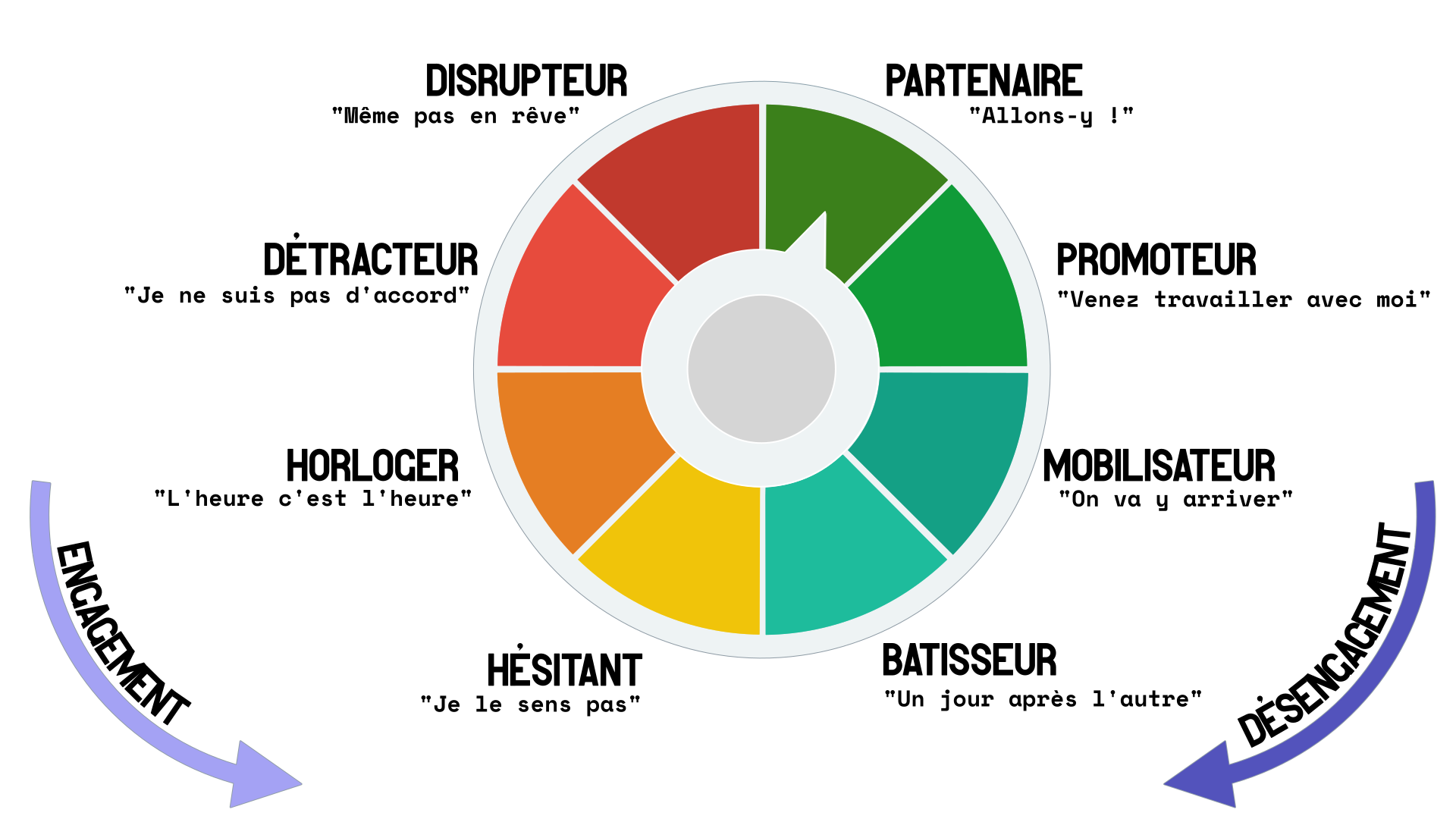
The Engagement Balance: Stay or Leave?
Employee engagement and commitment are fundamental to organisational success. They influence motivation, wellbeing, productivity and long-term performance. Engaged employees are more likely to take initiative, contribute new ideas and actively support continuous improvement. When people feel recognised and valued, they are also far more likely to remain with their organisation and contribute to its success over time. Maintaining a healthy Engagement Balance therefore becomes a strategic priority for every organisation.
Should people stay or should they leave? This question became the foundation of my research for a series of keynote presentations on employee engagement and the employee experience, as well as the new edition of my book Identify and Engage Your Talented Employees. During the first edition, I concluded that long-term professional commitment rests on four distinct forms of attachment.
- Commitment to the job
The Engagement Balance begins with an employee’s personal investment in their role. This reflects the value and meaning they attach to their work. People who find purpose in what they do are more willing to contribute, improve continuously and seek recognition. A healthy balance exists when the organisation creates an environment that satisfies these needs while achieving its own objectives. - Commitment to the profession
This dimension reflects a person’s long-term relationship with their profession rather than their current position. It evolves throughout an entire career, from entering the workforce through to retirement. A healthy Engagement Balance requires alignment between an individual’s professional aspirations and the development opportunities offered by their employer. - Commitment to work values
Employees also differ in the values they associate with work itself. These may include achievement, competition, mastery, purpose, autonomy or social recognition. Organisations create stronger engagement when they recognise these individual motivations and provide an environment where they can flourish. - Commitment to the organisation
Finally, the Engagement Balance includes organisational commitment: the emotional and professional attachment employees develop towards their employer. Employees who feel strongly connected to their organisation are more willing to invest discretionary effort and contribute to its long-term success. Organisations strengthen this commitment by providing security, recognition, growth opportunities and a shared sense of purpose.
How I use the Engagement Balance
Preventing burnout
Balancing commitment to the job, the organisation, the profession and personal work values helps prevent employees from becoming excessively invested in only one aspect of their working life. This reduces the risk of burnout and promotes healthier, more sustainable performance.
A balanced approach supports burnout prevention through:
- Thoughtful workload planning. Encourage regular breaks, annual leave and opportunities to recharge.
- Varied responsibilities. Rotate tasks and projects to reduce monotony and maintain engagement.
- Continuous learning. Invest in capability development to reduce stress caused by skill gaps and changing job requirements.
Increasing job satisfaction
People experience greater job satisfaction when the different sources of professional commitment reinforce rather than compete with one another. They can fully invest in their work while remaining aligned with their values, profession and organisation.
This can be strengthened through:
- Recognition. Reward both performance and genuine commitment.
- Supportive leadership. Provide managers who respect individuals and encourage professional growth.
- Career development. Offer clear career pathways that align personal ambitions with organisational goals.
Improving performance
Employees who maintain a healthy Engagement Balance are better able to focus on meaningful work while remaining connected to both their personal values and their organisation’s purpose.
Balanced engagement supports higher performance through:
- Aligned objectives. Connect individual goals with organisational priorities.
- Constructive feedback. Create regular feedback conversations that support continuous improvement.
- Greater autonomy. Give employees more control over how they achieve results, encouraging innovation, ownership and accountability.
Strengthening employee retention
Organisations that help employees maintain a healthy balance across these different forms of commitment are more likely to retain talented people. Employees who feel fulfilled, recognised and supported are less likely to seek opportunities elsewhere.
Retention can be strengthened through:
- Mentoring programmes. Connect new employees with experienced mentors who can support their development.
- Flexible working. Offer flexible arrangements that recognise both personal and professional needs.
- An inclusive culture. Build an organisation that genuinely values and celebrates diversity and inclusion.
Supporting mental health and wellbeing
A balanced approach to professional commitment also supports better mental health. Employees are able to invest fully in their work without sacrificing their personal values, professional identity or sense of wellbeing.
Organisations can encourage this by:
- Wellbeing initiatives. Develop programmes that encourage sustainable ways of working.
- Psychological support. Provide access to mental health support to help employees manage stress and anxiety.
- A positive working environment. Foster collaboration, psychological safety and mutual support across the organisation.