

Futureproofing
Futureproofing is a proactive approach that prepares an organisation for future change rather than simply reacting to it. It helps ensure long-term relevance, competitiveness and resilience by anticipating technological, economic, environmental and social shifts before they reshape the business landscape. By building the capabilities to adapt continuously, organisations are better positioned not only to withstand disruption but also to identify and seize new opportunities as they emerge.
Futureproofing is an organisation’s ability to remain relevant, resilient and high-performing in a world shaped by constant change and uncertainty.
It is about preparing today for futures we cannot yet predict by building an adaptive culture, developing agile leaders and teams, creating flexible business models and focusing on sustainable impact rather than short-term optimisation.
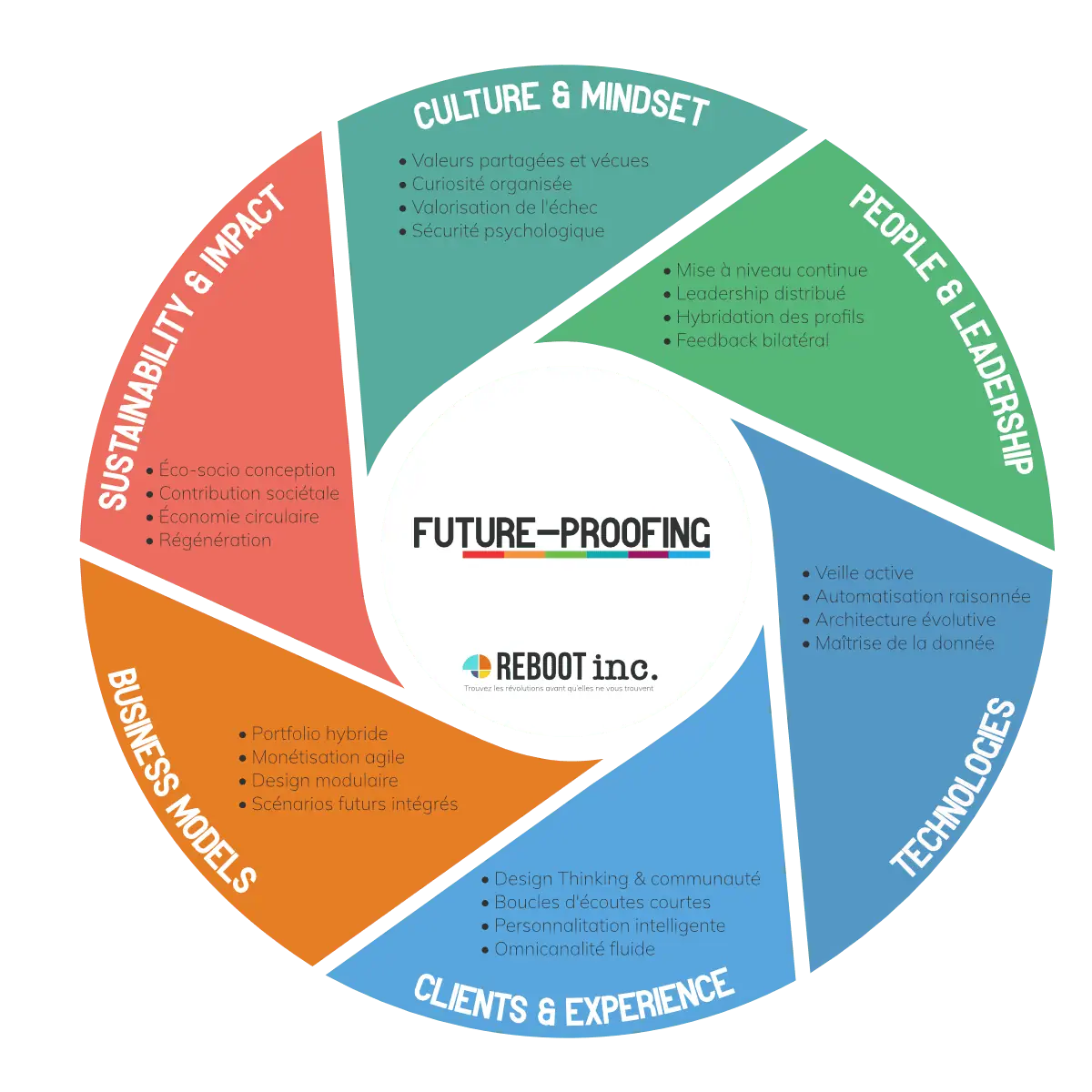
My multidisciplinary Futureproofing framework is built around six interconnected pillars. Their sequence matters because each one provides the foundation for the next.
Culture & Mindset: The invisible foundation
Every transformation begins with culture. Without openness, curiosity and a willingness to learn, no strategy, technology or innovation programme will succeed over time. Culture is the operating system that enables change.
People & Leadership: The drivers of change
Once the right culture exists, organisations need people who are capable, empowered and equipped to lead transformation. Future-ready organisations invest in leadership, adaptability and continuous learning before expecting change to happen.
Technology: The accelerators
Technology amplifies human capability. AI, automation and digital tools create value only when they support people and solve real business challenges. Technology should always serve strategy, never define it.
Customer Experience: The reality check
Customers provide the strongest signal about whether an organisation is creating value. Their feedback validates ideas, highlights emerging needs and helps organisations adapt before competitors do.
Business Models: How value is created
Futureproof organisations continually evolve the way they create, deliver and capture value. Business models should adapt in response to changes in customer expectations, technology, market dynamics and organisational capabilities.
Sustainability & Impact: The long-term perspective
The final pillar ensures that growth remains meaningful and sustainable. Futureproof organisations create value not only for shareholders but also for employees, customers, communities and the environment. Long-term success comes from aligning commercial performance with positive societal impact.
Futureproofing is the approach I use to help organisations become truly antifragile, as I explain in my keynote Building an Invincible Organisation. It goes beyond resilience. It is about developing the capabilities, culture and adaptability needed to thrive in an uncertain future rather than simply surviving it.
How does futureproofing work?
Futureproofing is a proactive strategy that prepares organisations, systems and people for change while positioning them to seize emerging opportunities. Instead of reacting when disruption arrives, organisations continuously build the capabilities needed to adapt, innovate and remain competitive.
The approach is built around several key principles.
- Scanning emerging trends. Organisations continuously monitor technological, economic, environmental and social developments that could reshape their industry. This strategic foresight helps identify both risks and opportunities before they become critical.
- Building organisational agility. Flexible structures, adaptive processes and responsive leadership allow organisations to adjust quickly as circumstances change. Strategies and operating models are reviewed regularly to prevent obsolescence.
- Investing in innovation. Organisations invest in new technologies, digital capabilities and innovative ways of working that improve efficiency, strengthen competitiveness and create long-term value.
- Developing people’s capabilities. Continuous learning is essential for maintaining a competitive workforce. Ongoing development enables employees to master new technologies, acquire future-ready skills and adapt confidently to changing business needs.
- Managing risk proactively. Rather than waiting for problems to emerge, futureproof organisations identify technological, economic, environmental and organisational risks early, allowing them to prepare and strengthen resilience before disruption occurs.
- Creating a culture of innovation. Innovation flourishes where curiosity, collaboration and experimentation are encouraged. Organisations that foster these behaviours are better equipped to generate new ideas and respond to changing customer expectations.
- Embedding sustainability. Long-term success depends on integrating environmental, social and economic sustainability into strategic decision-making. Sustainable organisations are better positioned to meet evolving stakeholder expectations while creating lasting value.
In short, futureproofing combines strategic foresight, innovation, organisational agility and continuous investment in people and technology. Rather than simply protecting an organisation from future disruption, it equips it to adapt, grow and turn uncertainty into a lasting competitive advantage.