


Startup Culture
Startup culture is defined by its willingness to challenge the status quo, pursue ambitious visions and adopt innovative approaches to solving problems. It encourages teams to take calculated risks, launch minimum viable products quickly, and continuously adapt based on customer feedback and the insights gained from analysing data.
You can criticise it, admire it or dismiss it as another management buzzword. Even so, many organisations continue to look to startups as a benchmark for culture, organisational design and agility.
At its core, startup culture is a set of values, norms and behaviours that emphasise extraordinary commitment, relentless focus on clear objectives, creative thinking that challenges established rules, speed of execution, and continuous learning through measurement, experimentation and feedback.
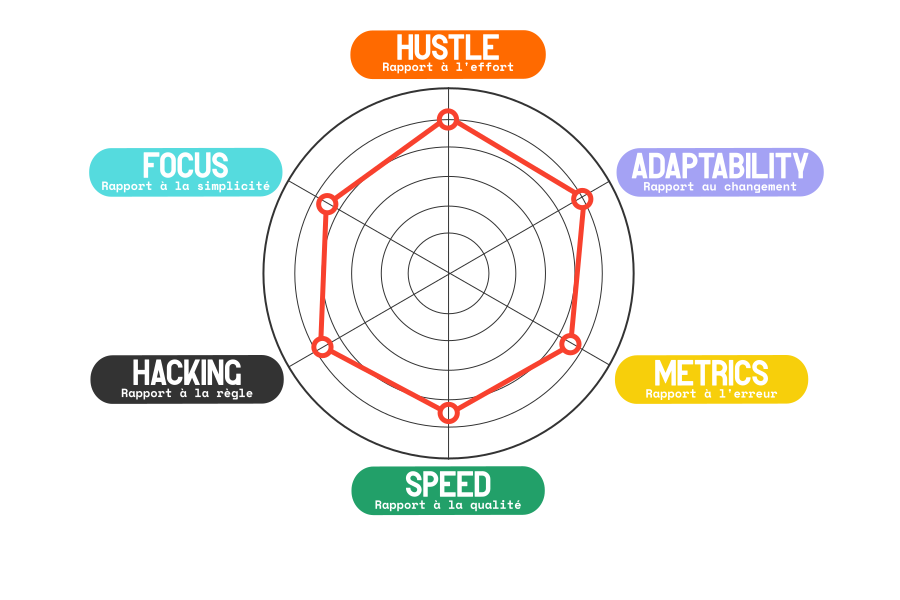
The six pillars of startup culture
Of course, there is no single startup culture, just as there are no two organisations with exactly the same culture. Having founded and led several businesses labelled as startups, advised many others through the entrepreneurial community L’AppArt, and analysed well-known startups for my Startup Autopsy podcast, I have identified six dimensions that consistently distinguish startup culture:
- Hustle (relationship with effort): Startup culture often celebrates hustle, meaning founders and teams are willing to invest extraordinary effort to achieve ambitious goals. This frequently involves long hours, personal sacrifices and resilience in the face of significant challenges.
- Focus (relationship with simplicity): Successful startups thrive by concentrating on one clear value proposition while eliminating distractions. This culture of focus encourages teams to simplify processes, remove unnecessary complexity and concentrate on what matters most.
- Hacking (relationship with rules): In a startup, hacking refers to finding creative, unconventional ways to solve problems. Rather than accepting established rules, startups are willing to challenge the status quo and overcome obstacles through innovation. The same philosophy also applies to HR Hacking.
- Speed (relationship with quality): Speed is a key competitive advantage for startups. Launching a minimum viable product (MVP) quickly and improving it continuously is often more valuable than pursuing perfection before release. This enables startups to respond rapidly to market needs and adapt based on customer feedback.
- Metrics (relationship with failure): Startups rely on meaningful metrics to measure progress and learn from mistakes. Failure is viewed as a source of learning rather than an endpoint. Teams analyse data to understand what works, identify what does not, and adjust their approach accordingly.
- Adaptability (relationship with change): Adaptability is essential in startup culture because markets evolve quickly. Startups must be prepared to pivot or adjust their business model, products or strategy in response to customer feedback, new market opportunities or unexpected challenges. This is exactly what we achieved with Trendemic when helping L’Oréal develop a startup mindset.
These six cultural dimensions are broad enough to avoid stereotypes while providing a practical framework for understanding organisations that are still searching for their business model. They can inspire established organisations, or serve as a reminder of what may not suit their own culture.
How I use startup culture in my work
Supporting continuous innovation
Established organisations are often slowed down by bureaucracy, rigid processes and an overly cautious culture. Adopting aspects of startup culture encourages greater openness to innovation. This means encouraging team members to propose new ideas, experiment freely and view failure as part of the learning process. This mindset helps organisations continue innovating and remain competitive.
Strengthening adaptability
Markets constantly evolve, and organisations that fail to adapt risk being left behind. Startup culture encourages responsiveness and flexibility when facing changing market conditions and emerging trends, as demonstrated in this case study. It means being willing to pivot quickly, reassess strategy and change direction whenever necessary.
This agility gives established organisations a genuine competitive advantage by enabling them to respond faster to both opportunities and emerging threats.
Developing an entrepreneurial mindset
Encouraging an entrepreneurial mindset allows established organisations to benefit from the creativity, initiative and energy of their people. It means giving everyone the freedom to make decisions, take calculated risks and pursue innovative ideas. Treating every team member as an entrepreneur within the organisation creates greater ownership, stronger engagement and ultimately better performance.
Attracting and retaining talent
Organisational culture is often a decisive factor when candidates choose whether to accept a job offer. By embracing elements of startup culture, established organisations can attract people seeking a dynamic, creative and purpose-driven workplace. Providing opportunities to innovate, take ownership and make a meaningful impact also improves engagement and long-term retention.
Renewing ways of working and sustaining growth
For an organisation to continue growing and succeeding, it must continually reinvent itself. Adopting elements of startup culture keeps organisations open to new ideas, fresh approaches and emerging technologies. This enables them to remain relevant in a constantly evolving business environment while supporting sustainable long-term growth.