


Emotional design
Emotional design is an approach that deliberately uses emotions to create positive experiences for users, customers, candidates and employees. Applied to recruitment, leadership and human resources, it focuses on understanding the emotional journey people experience at every stage of their relationship with an organisation. This includes how candidates feel throughout the recruitment process, how new employees experience onboarding, how managers shape day-to-day interactions, and even how people feel when they leave the organisation. By intentionally designing these moments, organisations can build stronger engagement, deeper trust and more meaningful relationships.
Imagine a workplace where every employee feels understood, valued and emotionally supported. A place where emotions are recognised as a source of strength rather than a sign of weakness. That is the essence of emotional design.
Emotional design in the workplace goes far beyond physical ergonomics or operational efficiency. It is about creating an environment that actively supports people’s emotional wellbeing. Every aspect of the employee experience matters, from the design of the workspace and the quality of the lighting to the way meetings are facilitated, feedback is delivered and everyday interactions unfold. Each element is intentionally designed to foster trust, confidence and a positive emotional experience.
The impact extends well beyond wellbeing. When people feel emotionally supported, they are more likely to take initiative, collaborate openly and fully engage with their work. This creates a positive cycle. Employees who feel psychologically safe contribute to a healthier workplace culture, which in turn attracts talented people, strengthens retention and improves organisational performance
The foundations of emotional design
This approach recognises the emotional needs of candidates and employees and aims to meet them by creating a positive, supportive and meaningful workplace. It is grounded in Human-Centred Design and inspired by emotive design, a discipline widely used in brand development.
Building a positive organisational culture
A positive organisational culture gives people the confidence and energy to do their best work. When recognition, gratitude, trust and genuine connection become part of everyday life, teams thrive and better results naturally follow. These are the foundations of organisations that perform well over the long term.
HR policies that respond to people’s emotional needs
HR policies that recognise the emotional needs of candidates and employees are essential for attracting and retaining outstanding talent. Looking carefully at both the candidate and employee journey, rather than relying solely on traditional wellbeing programmes, creates the conditions for a healthier and more productive workplace. Supporting work-life balance is not a perk. It is essential for sustainable engagement and performance.
Developing managers with emotional intelligence
Managers who understand and acknowledge the emotions of their team build stronger trust, loyalty and commitment. Developing emotional intelligence is therefore essential. The ability to respond appropriately to employees’ emotions is one of the foundations of a positive and productive workplace.
Designing positive employee experiences through emotional design
Making people feel valued, respected and listened to is what distinguishes exceptional organisations. Offering opportunities for professional growth is not an optional extra. It is part of building an organisation where people genuinely want to stay and contribute.
By now you’ve probably guessed what came next. I developed a practical and engaging approach to exploring emotions in the workplace called MoodStorming, designed specifically for management and leadership development.
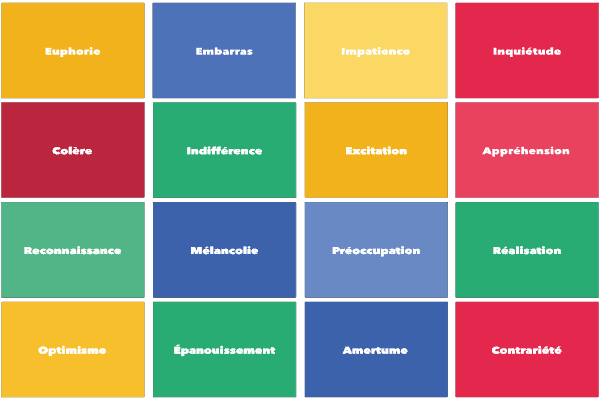
This deck of 64 cards helps people identify and name their emotional state, which is a fundamental step in developing emotional intelligence. Recognising our emotions allows us to manage them more effectively. The cards organise emotions according to their level of energy and emotional valence, making it easier to understand how we feel, respond more effectively in emotionally charged situations, or intentionally design the emotional experiences we want candidates, employees or customers to have.
Using the MoodStorming cards is straightforward. You can spread all the cards out and identify the quadrant that best reflects how you currently feel. Alternatively, you can begin with one quadrant and work through the emotions until you find the one that most closely matches your experience, making it much easier to talk about how you’re feeling.
How I use emotional design
Developing emotional intelligence
MoodStorming helps employees recognise and understand their emotions, which is an essential part of developing emotional intelligence. A better understanding of emotions enables people to manage their reactions more effectively while improving communication and collaboration.
Making better decisions
Recognising and understanding emotions helps people make more thoughtful and balanced decisions. By identifying the emotions influencing their judgement, they are better able to reduce emotional bias and make more considered choices.
Creating more engaging experiences for candidates, employees and customers
When leaders understand how people feel, they can design experiences that are more engaging and meaningful. Emotional design helps identify the emotions organisations want to create for candidates, employees and customers, then design interactions that encourage those emotional responses.
Improving communication within teams
MoodStorming cards provide teams with a practical language for talking about emotions. By identifying and sharing how they feel with greater precision, people improve mutual understanding, strengthen communication and collaborate more effectively. They also become better equipped to resolve conflict constructively.
Strengthening team cohesion
Emotional design encourages people to better understand and appreciate the emotions of those around them. Recognising and validating colleagues’ emotions strengthens trust, reinforces team cohesion and creates a stronger sense of belonging.
Ultimately, emotional design benefits far more than individual employees. It creates stronger teams, healthier organisations and, as a result, better business performance for my clients.