


Business model portfolio
A business model portfolio is a strategic approach in which a company adopts or explores several different business models at the same time. It is a way of reaching diverse market segments, of answering different customer demands, or of guarding against the risks and the uncertainty that come with relying on a single business model.
Developing several complementary business models means committing to reinventing your business models. That calls for rethinking the foundations and the structure of your commercial activity, so that you can adapt to changing conditions, seize new opportunities or answer today’s challenges.
Reinventing your business models as a portfolio calls for a holistic and agile approach, involving every stakeholder in the business, from leaders to employees, and including partners and customers.
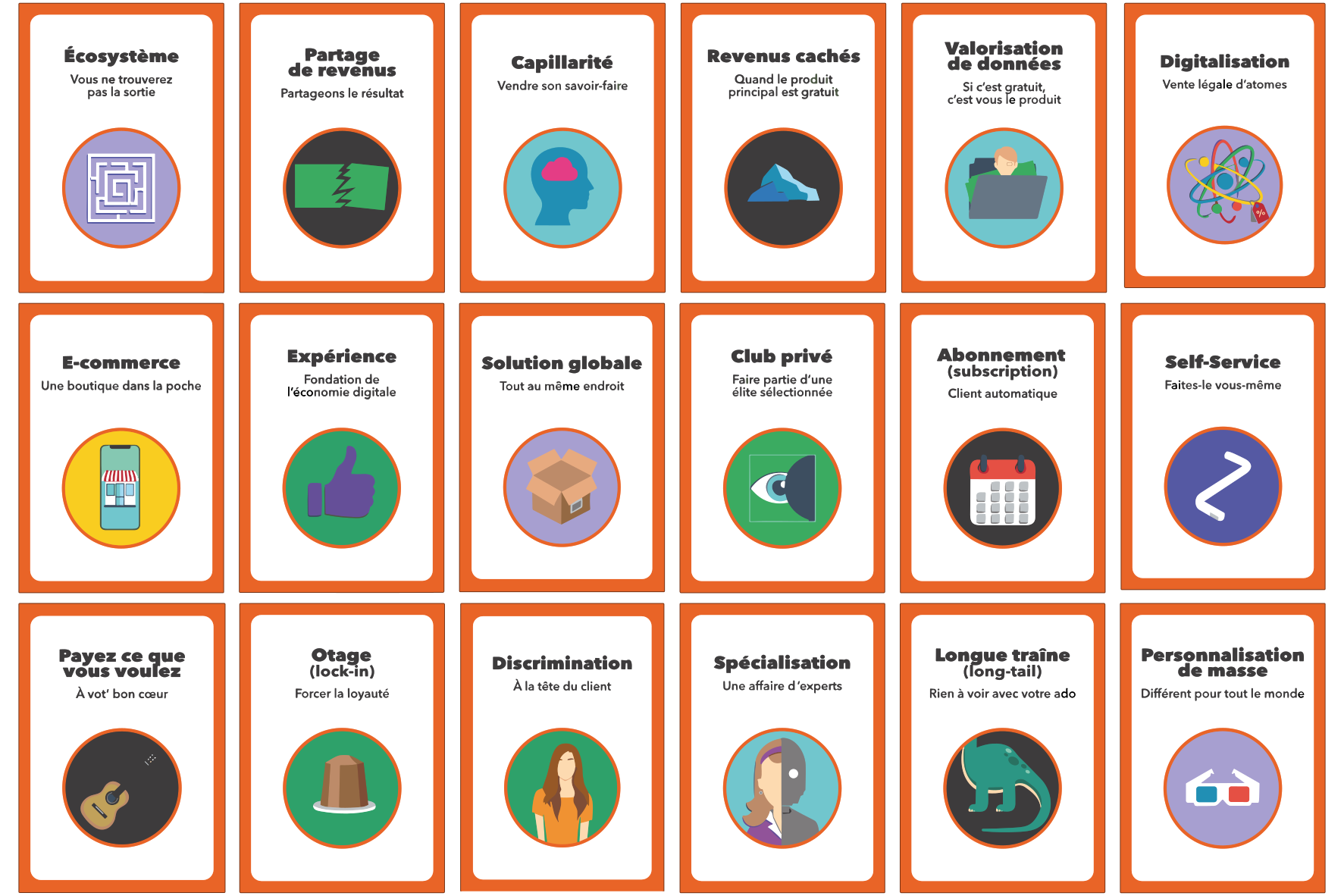
To create added value for the business and its customers by redefining how value is created, delivered and captured, I identified and modelled the 150 business models most used around the world and, as you have guessed, I developed 3 separate decks of 54 cards each:
-
- The essential business models
- The disruptive business models
- The sustainability business models
Until I put these decks on sale in my shop, I use them in my sessions, workshops and masterclasses on business model reinvention.
The business model portfolio approach
Stable business models no longer exist. You have to reassess and adapt your business models regularly. That work calls for a thorough step-by-step analysis, a strategic view and an appetite for innovation. In this context, I use a systematic approach to examine, reinvent and optimise your business model, while highlighting some of the most effective business models in use around the world today.
The approach covers:
- Analysis of the current business model. Identifying the strengths and the weaknesses of the business, understanding the key success factors, assessing market and competitive trends, and analysing the profit drivers.
- Identifying opportunities and challenges. Understanding market and industry trends, emerging technologies, customer needs, regulatory pressure, environmental and social challenges, and any other dynamic that could affect the business model.
- Developing new value propositions. Creating innovative products, services or solutions to meet the current and future needs of customers.
- Reinventing the value chain. Optimising or redesigning production, supply, distribution and after-sales processes to improve efficiency, quality and flexibility.
- Adapting revenue streams and cost structures. Exploring new ways to monetise, to optimise costs and to manage risk.
- Integrating technology and digital transformation. Using emerging technologies such as artificial intelligence, the Internet of Things or blockchain to improve the efficiency, the personalisation and the agility of operations.
- Making organisational and cultural changes. Reorienting company culture, organisational structure and employee skills to support the business model transformation.
- Monitoring and continuous improvement. Measuring performance, identifying areas to improve and adjusting strategies so that the business keeps adapting to changes in the market and the environment.
Using the business model portfolio
Diversified revenue and access to new markets
By holding several business models, a company can reach diverse market segments, whether different geographies, demographics or price points. That maximises revenue streams by offering products and services suited to a variety of customers.
Strategic flexibility
A portfolio of business models gives strategic flexibility, letting a company adjust its strategy as the market moves. That matters particularly in fast-moving industries where adaptability is critical.
Risk mitigation
Diversification reduces dependence on a single business model, and it protects the company against losses if that model fails or becomes less viable. Spreading risk across several areas of activity softens the overall impact of adverse market changes. It also gives a degree of security against long-term uncertainty.
Adaptability and responsiveness
A business model portfolio lets companies react quickly to market changes by pivoting to a model that fits better. It also gives them the option of adjusting the portfolio to suit opportunities and threats, which makes them more agile and more competitive.
Competitive advantage
Companies ready to innovate and adopt new business models are often better placed to get ahead of their competitors and seize new market opportunities. That gives them a significant competitive advantage.