

Rebuilding the apprentice-teacher bond through empathy
Redefining the teaching relationship in a secondary school. When empathy bridges teachers and students.
- client request
The client, who runs the school, is well aware of how much empathy matters in learning and asked for a session that would be active and engaging. The aim was to strengthen and enrich the relationships between teachers and apprentices, and to let every participant live through a deep experience of empathy.
The experience had to be designed to break down communication barriers and build genuine mutual understanding, laying the foundations for a learning environment that is more effective, more inclusive and more respectful.
By stepping into the heart of the empathy experience, teachers and apprentices connect at a deeper level. That supports the transfer of knowledge and it also builds a close learning community between teachers and apprentices.
- challenges
With growing demand for education that is more empathetic and more connected, several challenges came up in meeting the client's expectations. They run from raising awareness of the importance of empathy through to creating a space for constructive exchange, and they matter for strengthening the bond between teachers and apprentices and for supporting effective two way communication.
Here are the challenges I identified in order to understand what was at stake and what solutions were open to us.
Raising awareness of the importance of empathy in the teaching relationship. Teachers need to recognise and understand the value of empathy so they can strengthen their bonds with apprentices and teach more effectively. That awareness is the first step towards a learning environment that is more inclusive and more respectful.
Creating a space for exchange. A moment when teachers can better understand the concerns and the interests of their students. This means setting up a discussion that involves the apprentices themselves and encourages open and honest communication, so teachers can connect with students and understand their individual perspectives.
Offering tools and methods. The point here is to bring empathy into the daily practice of teachers. This can include training, workshops and resources that give practical strategies for applying empathy in teaching and in classroom management.
Encouraging two way communication. Students can also say how they feel and what they expect. Creating an environment where students feel safe and valued when they share their thoughts, their concerns and their ideas matters a great deal, because it makes sure their voices are heard and taken into account in the education process.
- stakes
The importance of empathy in education sits at the heart of this work, and what is at stake is both wide ranging and significant. One of the main issues is improving the quality of teaching by responding more precisely to the needs and the expectations of students. When teachers understand their students better, they can adapt their teaching approach, and that can greatly improve how well people learn.
Improving the quality of teaching. By bringing empathy into the teaching relationship, teachers can better understand the difficulties, the hopes and the motivations of each student, and adjust their teaching accordingly. This tailored approach strengthens the quality of education and also contributes to greater student satisfaction and success.
Strengthening student motivation and engagement. In a supportive and understanding learning environment, students feel more valued and more respected, which encourages them to take an active part in their own learning. A student who feels understood and supported is a student who is more motivated and more engaged. The same holds true in a business.
Recognising the diversity of backgrounds and experiences. Valuing the diversity of student backgrounds and experiences also matters. Every student arrives with their own history, their own experiences and their own perspective. By recognising and valuing that diversity, teachers can enrich the learning environment and offer an education that is more inclusive and more equitable.
Promoting a culture of exchange and mutual respect. An environment built on mutual respect and understanding encourages constructive exchange and collaboration, which are key ingredients for successful learning and for balanced personal and collective development. Which is exactly the point.
- solution
Interactive keynote
An introduction to the theme of empathy, along with the tools and methods used to build it at school and at work. Introduction to the idea of the experiential adventure.
Experiential workshop
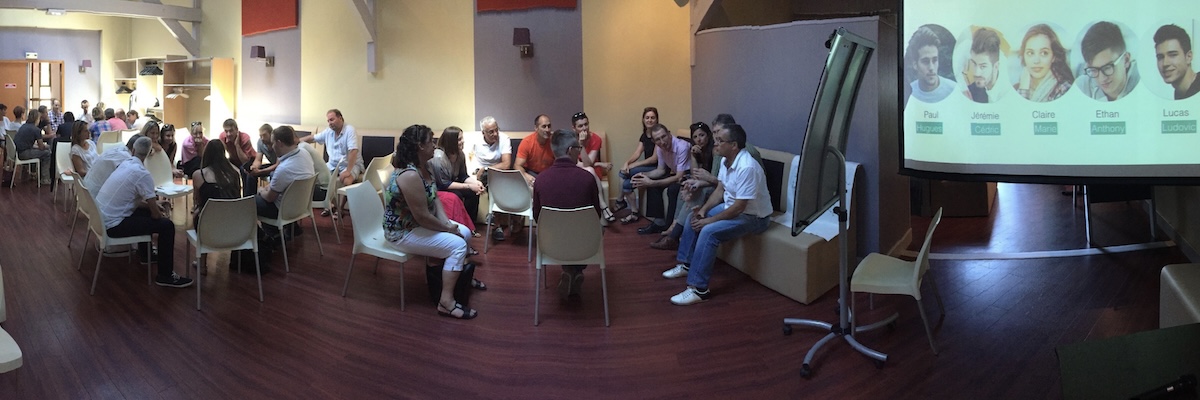
Participants were organised into tables of eight to create fictional student personas and to work out their interests, their life context, their view of the future and their learning environment
The reveal
The "fictional students" then came in, and they were in fact the real students of the teachers in the room. The personas were refined over a few minutes in direct discussion with the student concerned.
Reverse mentoring
The teachers share their persona with the student concerned. That student becomes the mentor of the group and shares their perspective to help the teachers understand them better.
- results
After putting in place the actions to bring empathy into the teaching relationship, the results are tangible and promising, and they mark a real step forward in the quality of teaching and in student satisfaction.
A better understanding of students. Teachers now understand the needs, the concerns and the hopes of their students far better. That understanding lets them adjust their teaching approach to meet student expectations, and deliver teaching that is more personal and more effective. Students feel better understood, which strengthens their engagement and their motivation in learning.
Practical tools and methods. These tools make communication and mutual understanding easier, and they also let teachers build teaching strategies that are more effective and more inclusive, which in turn creates a richer and more diverse learning environment.
Stronger communication. Open and honest dialogue is encouraged, so students can freely express how they feel, what concerns them and what they would suggest. This two way communication supports a learning environment that is more inclusive and more supportive, where every student can take an active part and feel valued.
Positive feedback from students. Finally, the positive feedback from students is a clear sign that the initiative worked. Students feel more listened to and more valued, which has a positive impact on their satisfaction as well as on their academic performance and their general wellbeing. That recognition helps create a positive and stimulating learning atmosphere where students can thrive and succeed.
TO ORGANISE A KEYNOTE, A WORKSHOP OR A MASTERCLASS