

Innovation, design and prototyping at Brico Dépôt
From idea to business model in 2 days
- client request
As part of an innovation program for company leaders, the client wanted them to experience a full immersion in a setting that demands constant questioning, a solid dose of creativity and the ability to work under heavy constraints.
The program was to run over two days with a clear structure, made up of design workshops, practical exercises and brainstorming sessions, all centred on innovation and creativity.
The purpose was to start a deep reflection on managing constraints, collaboration, creativity and innovation in a collaborative setting, rather than to produce a concrete deliverable or something that maps directly onto the daily work of a leadership team.
Participants were meant to leave with a fresh view of these themes, ready to apply them in their own professional context.
- challenges
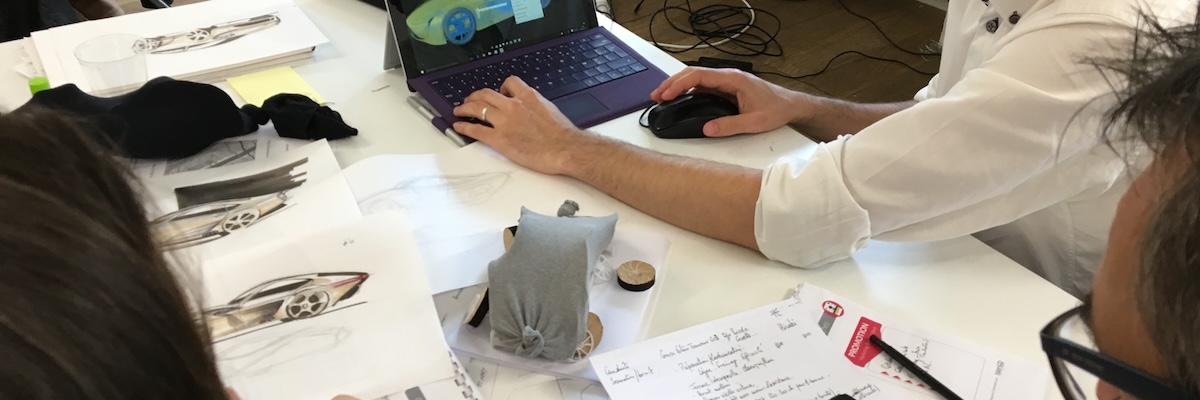
Working with Talenc, I put together a two day immersive seminar in a Paris Fab Lab, and I was well aware of the many challenges involved.
Creating an immersive environment. The first challenge is to take company leaders out of their comfort zone and out of their usual industry. The immersion has to place them in a setting where questioning is constant, creativity is essential and constraints are significant. Designing that kind of environment takes careful planning and effective coordination so that every element is in place for the experience to work. The setting has to encourage innovation while still managing constraints, so that it reflects the realities participants face in their own working environment.
Making the learning deep and practical. Participants need to learn about creativity, innovation and managing constraints, and they also need to be able to apply that learning once they are back at their desks. This calls for a well considered teaching approach that combines theory, practice and reflection. The trainers and the designers have to build modules that get participants actively involved, so they can experiment with the concepts, think about them and see how to apply them concretely in their daily work.
Running the logistics of the program. Organising a two day program with workshops, practical exercises, brainstorming sessions and presentations takes impeccable organisation so that everything runs without a hitch and participants get a smooth and rewarding experience. Coordinating venues, facilitators, materials and timings matters a great deal. It is also essential to plan how feedback will be collected from participants so the program can be adjusted accordingly, making sure the learning objectives are met and that people leave with concrete value for their professional practice.
- stakes
Given the need to innovate constantly, the issues around training and developing innovation and creativity skills have become a priority.
Improving the ability to innovate. The main issue in answering this request effectively is improving the ability of participants to innovate and manage creativity in a constrained environment. According to a McKinsey study, 84 % of leaders consider innovation essential to the growth of their business, while only 6% are satisfied with it. That gap shows how important it is to strengthen innovation skills. A successful answer to this request can therefore have a significant impact on the ability of participants to lead innovation in their own organisations, meeting a need that a large majority of leaders express clearly.
Strengthening collaboration and team performance. A better understanding and management of creativity and innovation can also lead to better collaboration within teams. According to a study by the Institute for Corporate Productivity, companies that promote collaboration are five times more likely to be high performing. By strengthening collaboration and innovation, this work can therefore help improve the overall performance of the organisations the participants come from. Putting an effective collaborative environment in place can translate into a clear increase in productivity and organisational performance.
Financial return on investment. Investing in this kind of program can deliver a considerable return. Companies that invest the most in training and developing their employees post a stock market return 45 % above the market average. Now imagine what that means when the executive committee is the group involved. This shows why it is worth investing in innovation programs to improve organisational performance and produce positive financial results. Investing in training and in the development of innovation and creativity skills can therefore translate into a significant increase in the value of the company on the stock market, offering tangible financial benefits on top of the operational improvements.
- solution
Discover
Experiment
Create
Prototype
- results
The impact of the experiential training solution has been both deep and transformative, showing up in a clear improvement in innovation skills and in collaboration. The results delivered by this training approach are tangible and significant.
Greater ability to manage creativity and innovation. Participants now show a stronger ability to work through creativity and innovation despite constraints. Immersed in a demanding environment, they picked up and absorbed essential skills and knowledge that they now apply every day in their professional roles. That change shows up as a more agile and innovative approach to challenges, which strengthens the competitiveness and resilience of their companies.
Better collaboration within the team. The program also triggered more effective and more harmonious collaboration within the leadership team. They now share ideas and solutions actively, creating a more inclusive and innovative working environment. That positive dynamic flows through to productivity and satisfaction, and contributes to a healthier and more energetic company culture.
A stronger culture of innovation. The culture of innovation has been strengthened considerably. Members of the executive committee feel more valued and more involved in the growth and development of their organisation. This cultural change has improved satisfaction and it has since started to attract good talent, people who want to work in a stimulating and innovative environment.
The results demonstrate the effectiveness of a program built on design tools and on joint delivery by designers and myself, and they confirm how important it is to invest in developing innovation and creativity skills, even in a constrained environment.
TO ORGANISE A KEYNOTE, A WORKSHOP OR A MASTERCLASS