


Curiosity in meetings gets recommended constantly and almost never sticks. There is a reason for that, and it has very little to do with whether your people know how to ask a good question.
Start with the scene, because you have sat in it. Somebody raises a problem. Before they finish, three colleagues have offered solutions that were tried two years ago, and a fourth has said the phrase that ends the conversation without appearing to: building on what Geraldine just said, that reminds me of something we ran into last quarter.

Geraldine’s problem has just been disposed of, correctly, in the approved format. Everyone behaved well. Nobody interrupted. The meeting was efficient and Geraldine leaves it knowing that nobody asked what she actually needed.
The usual response is to train people in questioning techniques. I have delivered that training and watched it fade within a fortnight, which eventually made me ask a better question about why. The answer is structural, and it is the subject of this article.
| The usual diagnosis | Why the fix fades | The structural reading |
|---|---|---|
| People lack questioning skillsAdvice on curiosity in meetings treats it as a technique: ask before solving, defer judgment, listen to understand. The techniques are sound and widely documented, and they are taught as though the obstacle were ignorance. | The behaviour has no payoffTrained behaviour reverts within weeks in most teams. Asking about a colleague’s problem costs time and returns nothing when members answer to a manager rather than to each other, so the group reverts to the arrangement that pays. | Curiosity is a symptomBenjamin Chaminade’s position is that curiosity indicates mutual accountability rather than producing it. Where members owe each other nothing, no amount of training makes attention to someone else’s problem rational, and the ratio of questions in a room measures that directly. |
What is actually happening in that meeting
The room is not failing at listening. It is doing something coherent, which is competing politely for airtime on the only subject that carries any return for each person present. That competition is well mannered, conducted in the approved vocabulary, and it consumes the whole hour.
Nobody in that room is behaving badly. Each person is responding rationally to the way the group is put together.
The polite hijack
The hijack is the move that redirects a conversation to your own concern while appearing to build on someone else’s. Building on what you said, that reminds me. Following that thread, in my area. The grammar signals continuity and the content changes the subject, which is why nobody objects.
Watch for it once and you will not stop seeing it. In many meetings the original problem is never returned to at all.
The person who raised it learns something from that, and what they learn is to stop raising things.
A group of colleagues rather than a team
Most groups I meet are not teams, and the difference is precise. In a team, members are accountable to each other for a shared outcome. In a group of colleagues, each member is accountable upward to a manager and to nobody sitting beside them, which makes the meeting a queue for the manager’s attention.
Call it a team all you like. The seating tells you which one you have.
Mutual accountability is the missing ingredient, and it connects directly to the work on shared responsibility that runs through the six circles of managerial transformation.
Why the manager is the last to notice
From the front of the room the meeting looks fine. People contribute, nobody is rude, the agenda gets through, and the manager receives a steady flow of updates addressed to them. All the signals a manager uses to judge a meeting are the signals a queue produces.
The information that would change that reading never reaches them. Nobody reports that their problem was disposed of politely, because the disposal was polite.
What does reach the manager is the corridor version, weeks later, usually from one person and usually framed as a complaint about a colleague. That framing is misleading, and acting on it makes the situation worse by turning a structural problem into an interpersonal one.
The simplest correction is to stop being the audience for one meeting and watch what happens to the airtime. Managers who try this usually report an uncomfortable first fifteen minutes and a considerably more useful hour.
Why curiosity has no payoff in a group
Attention is a cost. Spending twenty minutes genuinely understanding a colleague’s problem uses time that could have been spent on your own, and in a group of colleagues that trade returns nothing. Curiosity is therefore not a virtue the room is failing to display. It is an investment the structure does not pay for.
This explains the fade. Training changes behaviour for as long as people are consciously performing it, and then the incentives reassert themselves.
Why curiosity in meetings is a symptom rather than a skill
Read curiosity as an indicator and it becomes useful. A room full of questions about other people’s problems is telling you that mutual accountability exists. A room where every question routes back to the asker is telling you the opposite, and it is telling you accurately, which is more than most engagement surveys manage.
That reading changes what you do about it. You stop scheduling training and start looking at what your people are measured on.
The wider case for curiosity as a working capability rather than a personality trait sits in my article on professional curiosity at work.
What would have to be true
Three conditions make curiosity rational. Members share at least one outcome they are jointly judged on, they have something the others need that cannot be obtained elsewhere, and the manager stops being the only audience in the room. Change any one of the three and the questioning behaviour follows without being taught.
The third is the cheapest and the one managers resist most. It means saying less, later, and letting a silence run past the point of comfort.
A manager who speaks first in every discussion has already decided who the meeting is for.
Count the questions instead of surveying the mood
The measurable unit is the proportion of questions in a meeting that concern somebody else’s problem rather than the asker’s own. It takes one person with a notepad and no software at all. Unlike a post-meeting survey, it records what happened rather than how people felt about it afterwards.
Most teams running this for the first time are unpleasantly surprised, which is the point.
A tally you can run in your next meeting
Ask one person to observe rather than participate, and tell the room you are doing it. Concealing the exercise changes the behaviour you were trying to measure and costs you the trust you need for the conversation afterwards.
- Mark every question asked, ignoring statements and rhetorical questions dressed as enquiries.
- Sort each one into questions about the asker’s own work and questions about somebody else’s.
- Mark separately any question that arrived after a solution had already been proposed for the same problem.
- Note how many times a problem raised was returned to before the meeting ended.
- Share the four numbers with the room without interpreting them, and let the group draw the conclusion.
Step five matters more than the counting. A group that reaches the conclusion itself will act on it, and a group told the conclusion will defend itself.
What the ratio tells you
A high proportion of questions about other people’s work indicates a team with real mutual accountability, whatever its meeting habits look like. A low proportion indicates a group, and no technique will fix that. The count of problems returned to before the end is the sharpest single number, since it measures follow-through rather than politeness.
Run it twice, three months apart, against the same meeting type. The direction of travel is more informative than any single reading.
If the ratio improves after you changed what the group is jointly measured on, you have your answer about what actually drives it.
Field note
Everyone was frustrated, for entirely different reasons
I ran a session with a leadership group whose weekly meeting had become the thing everybody complained about privately and nobody raised in the room. Rather than teaching anything, I asked each person to describe what it was like to be a member of that group, before any discussion of fixes.
The surprise was not that people were frustrated. It was that no two of them were frustrated about the same thing. Some resented the work the meeting generated afterwards. Others thought the status updates could have been a document and were annoyed at losing the hour. A third group had noticed that the difficult subjects were never raised in the room and were being handled in corridor conversations with the wrong people, which was steadily eroding trust. Each person had assumed their own frustration was the shared one. What made the session work was that nobody was allowed to propose a solution until all of them had been said aloud.
The operational lesson is to make the group describe its own experience before it designs a fix. Frustration is almost never shared in the way people assume, and a solution built on one person’s version of the problem will be resisted by everyone whose version was different.
What to change, and in which order
Change the accountability first and the technique second, because the reverse order is what produces the fortnight of good behaviour followed by relapse. Once members are jointly answerable for something, the questioning practices become worth learning, and they are well documented by people who have studied them properly.
Both halves are necessary. Structure without technique produces mutual accountability expressed badly.
Changing what the group is jointly judged on
Find one outcome the whole group can be measured on together, and make it visible in the meeting. It has to be something no member can deliver alone, otherwise the group will decompose it into individual tasks by the second week. A shared customer outcome usually works, and a shared internal metric usually does not.
Then change who the meeting reports to. If every update is addressed to the manager, the manager should say so and stop taking them in that setting.
The related work on how managers hold their own attention sits in managing with curiosity.
The techniques worth learning once the structure holds
Harvard Business Review has published useful practical material on curiosity in meetings, covering the habit of defining a problem before solving it, holding back praise and criticism long enough to hear what someone actually thinks, and resisting the urge to answer a colleague’s account with your own similar experience. Those practices work, and they work in a room where attention is already worth spending.
The one I use most is the shortest. Two words, say more, deployed both when I am genuinely interested and when I notice I am about to judge.
The one I watch for most is the phrase at least, which ranks somebody’s difficulty against a worse one and closes the subject.
When the meeting should not exist
Part of the answer is subtraction. A recurring meeting whose only function is circulating information does not need curiosity, it needs a document, and defending it as a chance to connect is usually a way of avoiding the decision to cancel it.
The test is whether anything is decided or changed in the room. If the answer over three consecutive occurrences is nothing, you have a broadcast with chairs.
Cancelling it frees the hour that the meeting people actually need can occupy. Groups that do this discover the remaining meeting improves without anyone learning a technique, because attention stopped being rationed across five sessions a week.
How I work with teams on this
I work on the structure before the behaviour, which usually means a session with the group about how it is put together rather than a workshop on questioning technique. That runs as a facilitated session, a keynote where a larger audience needs the frame, or a short diagnostic across several meeting types.
The opening request is always the same. Let me sit in one of your meetings with a notepad and count.
Sessions and the curiosity matrix
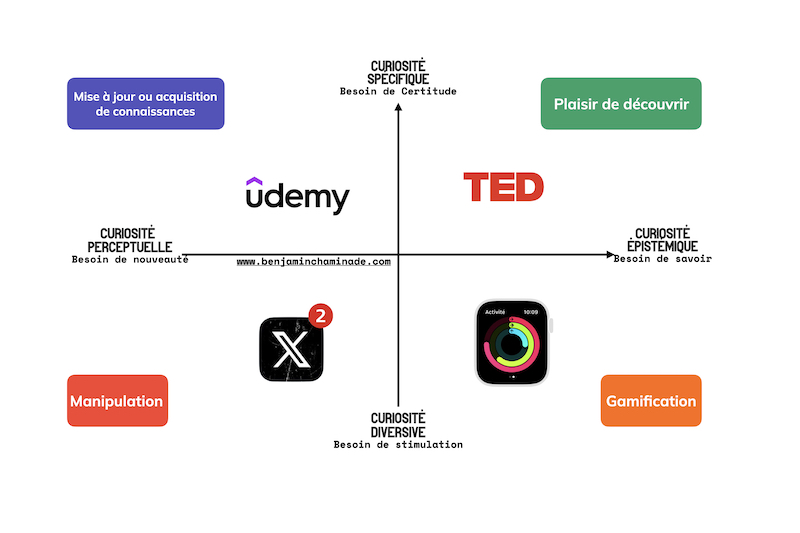
A facilitated session suits a group ready to describe its own experience honestly before anyone proposes a fix. The curiosity matrix gives the group a shared vocabulary for what kind of questioning it currently does, which makes the conversation about the room rather than about individuals.
Sessions run in Australian English with Australian examples, and the exercise uses your own meetings rather than case studies.
You can read more across my writing on curiosity, which treats it as an organisational capability rather than a personality trait.
Keynotes and diagnostics
A keynote suits a leadership event where a large group needs the structural argument before their own meetings are examined. A diagnostic suits organisations that have already run questioning training and watched it fade, and want to know why before spending again.
The diagnostic output is the four numbers described earlier, taken across three meeting types, with the pattern rather than the scores.
I will also tell you when the meeting is fine and the problem is the manager, which is a shorter and cheaper conversation.
Conclusion
Everybody in that meeting was behaving reasonably. Geraldine’s problem disappeared because attending to it cost time and returned nothing, and each person present did the sensible thing with the hour they had.
So stop treating curiosity in meetings as a skill your people are missing. Count the questions, look at what the group is jointly judged on, and change that before you book anyone to teach anything.
Get the structure right and the questions arrive on their own. Get it wrong and you will run an excellent workshop, feel encouraged for two weeks, and watch the room go back to taking turns.
Frequently asked questions about curiosity in meetings
How do I make my team more curious in meetings?
Change what the group is jointly measured on before teaching any technique. Curiosity costs attention, and in a group where members answer only to a manager that spend returns nothing, so trained behaviour fades within weeks.
What is the difference between a team and a group of colleagues?
In a team, members are accountable to each other for a shared outcome. In a group of colleagues, each person answers upward to a manager and to nobody beside them, which turns the meeting into a queue for the manager’s attention.
How can I measure whether my meetings are working?
Count the proportion of questions about somebody else’s problem rather than the asker’s own, and count how many raised problems were returned to before the end. Both take one observer and a notepad, and they record behaviour rather than mood.
Why does questioning training stop working?
Because it changes behaviour only while people are consciously performing it. Once attention returns to normal, the incentives reassert themselves, and the group returns to the arrangement that actually pays each member.
What phrases should I avoid in a team meeting?
Watch for at least, which ranks somebody’s difficulty against a worse one and closes the subject. Watch for me too, which moves the spotlight. And watch for building on what you said, which frequently signals a change of subject rather than a continuation.


