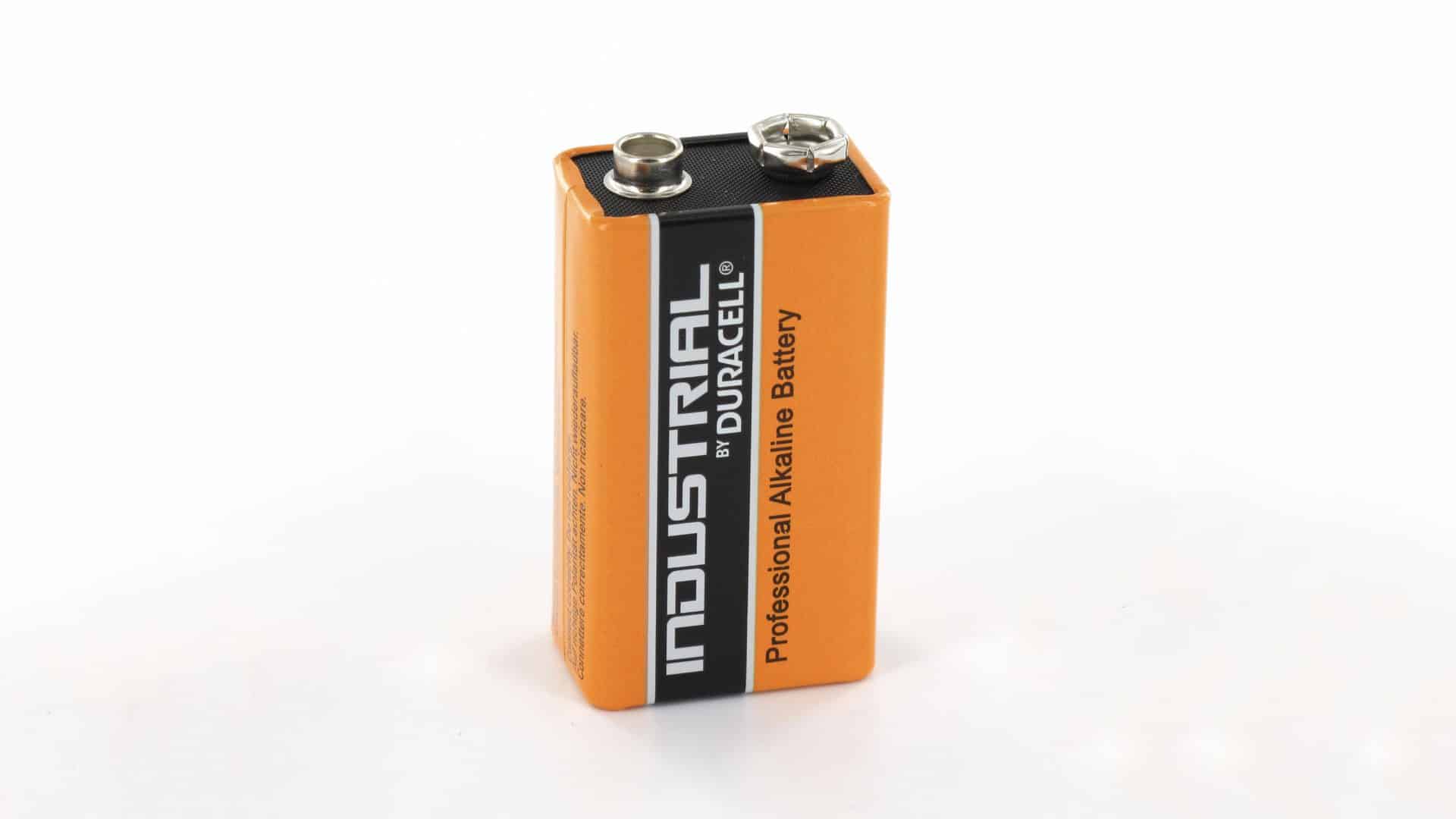
Radical innovation, disruptive innovation, disruption. Business owners enjoy discussing these, usually while supplying their own definition in place of having understood what is at stake. I reach for the word disruption about as willingly as I would put my tongue across both terminals of a battery.
The two terms get used as synonyms constantly and they describe different practices carrying different levels of risk. Choosing between disruptive innovation or breakthrough innovation is a real strategic decision, and it is impossible to make while the words mean whatever the room needs them to mean.
Part of the confusion has a documented cause. Two different people gave business that vocabulary, three years apart, meaning two unrelated things, and almost every conversation since has been conducted in the wreckage.
The distinction I use is sharper than a difference of degree. Disruptive innovation adapts to an environment, finding the opening an over-served market has created. Breakthrough innovation refuses the environment, betting on difference against the whole category.
Both sit inside a wider set of four strategies I work with, and this article deals with the two that get mistaken for each other. Examples for each, the origins of the vocabulary, and the tools that find them.
| The confusion | Where it comes from | The distinction that works |
|---|---|---|
| Two words used as oneDisruptive innovation or breakthrough innovation get treated as interchangeable labels for anything ambitious. They describe two different practices carrying two different levels of risk, and picking between them is a strategic decision rather than a matter of vocabulary. | Two origins, three years apartAn advertising executive trademarked Disruption in 1992 as a creative method built on breaking category conventions. A separate economic theory of disruptive technologies was published in 1995 with no connection to it. Both originators have since objected publicly to how the word is used. | Adaptation against refusalDisruptive innovation adapts to an environment, serving the customers an over-served market has abandoned. Breakthrough innovation refuses the environment, inverting the conventions the whole category obeys and betting on difference rather than on a gap. |
Two words, two origins, three years apart
Before comparing the two practices it helps to know why the vocabulary is such a mess. Disruption entered business language twice, independently, from two men who have both since complained in public that nobody uses it correctly.
Jean-Marie Dru and the trademarked method
The first arrival was an advertising man. In 1992 Jean-Marie Dru, then co-founder and chairman of the French agency BDDP and later chairman of TBWA, took out a full page in Le Figaro and the Wall Street Journal under the single word Disruption.
The French original of the idea was stratégie de rupture. Going international required an English word, and by Dru’s own account the agency chose disruption because nobody in business was using it, then trademarked it as the name of their methodology.
The method is a creativity discipline in three moves. By the agency’s own description it identifies the conventions surrounding a brand, defines a vision, then builds a strategy that breaks the convention rather than the market.
Bower, Christensen and the economic theory
The second arrival, three years later, is the one everybody has heard of. Joseph Bower and Clayton Christensen published their account of disruptive technologies in Harvard Business Review in 1995, and it became a global bestseller in book form.
Their mechanism is economic rather than creative, and it grew out of studying why large successful companies fail. The core error they identified is over-serving: incumbents keep adding features with each increment until the product becomes too expensive and too complicated to use.
That opens a commercial gap. A simpler, cheaper solution appears, it first attracts the customers the incumbents considered least profitable, and it gains traction as more demanding buyers recognise they were paying for features they never used.
Note the ordering, because it explains everything that followed. The trademarked creative method came first, in 1992, and the economic theory that made the word famous arrived in 1995 with no connection to it. I have written separately on where the definition of disruption currently stands.
Why radical innovation is called breakthrough
In French the fourth strategy is innovation radicale, and the accepted English term for it is breakthrough innovation. That is not a translation convenience, it is a more accurate word, because radical suggests a matter of degree and breakthrough suggests passing through something.
What you break through is a convention. Dru’s method is built on identifying the rules a category obeys without remembering agreeing to them, and then transgressing one deliberately.
So the two terms in the title of this article are not two intensities of the same activity. One responds to a market condition and the other rejects a shared assumption, and everything practical follows from that.
Disruptive innovation, adapting to an environment
Disruptive innovation in Christensen’s sense is fundamentally an act of adaptation. The market has created an opening by over-serving its best customers, and the disruptor reads that opening accurately and moves into it with something simpler and cheaper.
What Christensen actually described
The definition is narrow and the narrowness is the point. A disruptive innovation is a solution that is simple, inexpensive and easy to get hold of, aimed initially at customers the incumbents were happy to lose.
What it offers has to be worse in the terms the existing market values, and better in terms that market does not care about. Fewer features, less service, no salesperson, a lower price.
Digital delivery has made this considerably easier, which is why so much of it now looks like software. Concluding that a digital business is therefore disruptive is a shortcut too far, and it accounts for most of the misuse of the term.
Michael Dell, and Dell’s own turn
The clearest example remains Michael Dell working out that he could order components, assemble them, ship them himself and sell them online for less than the retail alternative. That produced a disruptive business model rather than a disruptive technology, by removing the intermediaries.
Notice what he did not do. He did not invent a new machine, he did not break a convention about what a computer should be, and he did not ask anybody to change what they wanted. He read a distribution structure and adapted to it.
The instructive part came later. Dell then faced its own disruption as tablets arrived, which is the pattern completing itself: today’s disruptor becomes tomorrow’s over-serving incumbent, because the same continuous improvement that built the position eventually complicates the product.
Australian examples are easiest to see in services rather than devices, wherever a category built on advisers and paperwork has been re-served through an application at a fraction of the price, to people the advisers were never going to call back.
How rare disruption actually is
One piece of evidence should change how you read every claim of disruption you encounter. The theory has been tested against its own examples and the result is sobering for anyone using the word loosely.
Andrew King and Baljir Baatartogtokh took cases Christensen himself presented as disruptive and checked them against his published criteria. Reviewing seventy-seven such cases, they concluded that around nine per cent fitted all of the theory’s key elements.
This is not critics disagreeing about definitions from outside. It is the theory’s own showcase examples measured against the theory’s own tests, which makes the finding hard to argue with and easy to ignore.
The conclusion I draw is not that the theory is wrong. It is that the phenomenon is rare, most self-described disruption was something else, and a good deal of it was probably the other practice in this article’s title.
Breakthrough innovation, refusing the environment
Where disruptive innovation adapts to an environment, breakthrough innovation refuses it. The bet is on difference itself rather than on a gap somebody else created, and it rests on three positions that all sound reckless until you look at what they produce.
One, it can pay to wait
The first position is that waiting is sometimes the strategy. Customer preference can turn against your competitors at any moment, and at that moment those customers will be looking for an alternative, so being visibly different matters more than being early.
The long argument between open and closed computing architectures illustrates it, along with the very different design philosophies attached to each. One approach looked correct for years, then the other did, and neither company changed its fundamental position while the tide moved underneath them.
Which raises the uncomfortable question a breakthrough strategy has to live with. If preference is cyclical, whose turn is it next, and are you holding a position you can afford to hold until it comes round?
Two, doing the opposite on purpose
The second position is that it can be productive, instructive and profitable to simply do the reverse of what competitors do, betting everything on difference. This sounds like a stunt and it is a method, provided the thing you invert is a convention rather than a safety standard.
Restaurants make the exercise legible. The category conventions are that you receive the menu before the meal, that a menu has three courses, and that the bill reflects ingredient cost plus service.
El Bulli, until it closed in 2011, inverted all three. Thirty courses rather than three, the menu handed over at the end of the meal rather than the beginning, and a price attached to an experience rather than to a plate of food.
None of that required a new technology. It required somebody to notice three rules everybody in the category obeyed without ever having chosen them.
Three, not listening to your customers
The third position is the most dangerous and the most necessary. Customers sometimes do not know what they need, so a breakthrough approach puts them in front of something new and accepts the reaction, which can resemble a chicken confronting a fork.
Outright rejection is a normal early result. Anyone who has watched a loyal customer discover that a familiar port has been removed from a device has seen what refusing the environment costs in the short term.
This is where breakthrough work differs from arrogance by a narrow margin, and the margin is evidence. Ignoring what customers say about a product they have never seen is defensible, and ignoring what they say about one they have been using for two years is not.
Which is also why this strategy needs particular people in the room, the ones who will say the unpopular thing without being asked twice. That is a hiring question as much as a strategy question, and I have set out the case for recruiting the people who will contradict you separately.
Field note
An email from the man who owns the word
I write about disruption fairly often, and some years ago I received an email from Jean-Marie Dru himself, reminding me who the authority on the subject is. He publishes regularly to make the same point to a wider audience, and I do not blame him for it.
My first reaction was amusement. My second was more useful, because the email is evidence of something the literature does not capture. Here was the man who introduced the word to business, watching an entire generation use it to mean a theory published three years after his, by an author who was himself objecting that nobody applied his definition properly. Two originators, both correcting the record, and a business world that had stopped listening to either of them somewhere around the point the word became free.
What I took from it is why I stopped using disruption as a strategy in its own right. A word that needs a footnote explaining which of its two inventors you mean is not a strategy, it is a negotiation. Naming the practices separately, disruptive for adapting to a market opening and breakthrough for refusing a category convention, costs one extra sentence to explain and never needs defending again.
The difference that actually matters
Set the two side by side and the distinction stops being semantic. They read different signals, they need different people, they fail in different ways, and they carry genuinely different levels of risk.
Adaptation against refusal, compared
The table is the fastest way to see it. Read the risk row last, because it is the one boards get wrong most often when they use the two words interchangeably.
| Question | Disruptive innovation | Breakthrough innovation |
|---|---|---|
| Origin of the term | Bower and Christensen, 1995, an economic theory of why incumbents fail | Jean-Marie Dru, 1992, a trademarked creative method for breaking conventions |
| What it responds to | An opening created by incumbents over-serving their best customers | A convention the whole category obeys without having chosen it |
| Relationship to the market | Adaptation, reading the environment accurately and moving into it | Refusal, betting on difference against the environment |
| Who you serve first | The customers the incumbents were content to lose | Nobody who has asked for it yet |
| What the offer looks like | Simpler, cheaper, fewer features, easier to obtain | Unfamiliar, sometimes rejected on first contact |
| Typical failure | Getting stuck at the low end, never moving upmarket | Inverting a convention that turned out to be a real constraint |
| Level of risk | Moderate, because the demand already exists and is measurable | High, because the demand has to be created and cannot be surveyed |
The risk difference is the practical payoff of the whole distinction. Disruptive work bets on a market you can measure, and breakthrough work bets on a market you cannot, which means they should never be funded on the same timeline or judged by the same milestones.
Disruptive innovation or breakthrough innovation, which you are equipped for
The honest test is historical rather than aspirational. Disruptive work requires an organisation willing to serve a customer it currently declines, at a margin its own funding thresholds would reject, which is a structural question rather than a question of ambition.
Breakthrough work requires something rarer, which is the ability to see your own conventions. That is close to impossible from inside a single category, because a rule you have obeyed for twenty years does not present itself as a choice.
Both sit within a wider sequence of four strategies, continuous and adjacent coming before these two, and each earlier stage builds capability the later ones consume. An organisation that has never operated outside its own market has never tested whether its success was capability or position.
Want the other two strategies as well?
Ready to see where these two sit in the full picture? Read the four innovation strategies and how to run a working group for each, from continuous through to breakthrough.
How to find each one
The two practices need different search methods, which is another reason confusing them is expensive. Looking for a market opening and looking for a category convention are different activities requiring different people in the room.
Finding disruptive openings, trends and subtraction
Since the aim of disruptive work is turning something scarce into something commonly available, the method leverages large movements: technological, societal, social and managerial. Two approaches do most of the work.
The first is a trend-based brainstorm. Catalogue the movements that matter across several families, then look for the disruptive opening that appears where two or three of them intersect. Trendstorming is the method I use for that, and it works with a team rather than an analyst.
The second is subtraction, in the spirit of a minimum viable product. Identify the competitors who have exceeded their customers’ requirements to the point where the solution is far more advanced and expensive than the need, then build for a single promise instead of a feature list.
Who to invite matters as much as which tool. The people who read the environment for a living, plus customers who are perfectly happy and use a fraction of what they pay for, which is the clearest signal of over-service available anywhere.
Finding breakthroughs, clichés and blue oceans
Breakthrough work starts by listing what your competitors have in common. Find the clichés, meaning the commercial and marketing practices they all use and which make them indistinguishable from one another, then invert one.
The second approach is looking for an uncontested space, which W. Chan Kim and Renée Mauborgne named a blue ocean. Their wine example is instructive precisely because it was copied: one brand created differentiation and a procession of animal-labelled competitors followed within a few years.
Which is why I look for something I call a pink ocean instead. A position so marked by the values it carries that competitors will not copy it, because copying would require becoming something they are not, and wine in a can is a better example of that than any amount of label design.
How I can help you choose between them
Nobody I work with needs another definition of disruption. They need somebody to establish whether the programme they have funded is disruptive work, breakthrough work or neither, because the three need different money, different timelines and different people.
Workshops and masterclasses
The workshop runs the cliché exercise on your own category, live, which is the fastest way to find out whether a group can see its own conventions. Most cannot at first, and the ones they name in the first ten minutes are always the superficial ones.
Masterclasses go wider and take in the business model implications, since a breakthrough position usually requires a different way of charging. That connects directly to the work on opportunities and business models.
Keynotes and diagnostics
Keynotes suit the moment when a room has been using disruption as a synonym for ambition. Setting out the two origins and the nine per cent finding changes the tone of the conversation within twenty minutes, and it does so without blaming anybody present.
The diagnostic looks at whether your structure could carry either strategy, since funding thresholds and margin tests explain more innovation failure than culture does. Reading where change is coming from sits alongside it, which I set out in the framework on the sources of disruption.
If you want to test which of the two you are equipped for, a conversation beats a proposal. You can tell me three conventions your industry obeys and we will find out quickly whether you can see them.
Conclusion: one adapts, the other refuses
The two words arrived in business three years apart from two men who have both spent years objecting to how they get used. That history explains the confusion, and it does not excuse continuing it.
Disruptive innovation adapts to an environment. An over-served market leaves customers behind, somebody reads that accurately and serves them something simpler and cheaper, and the demand can be measured before the money is spent.
Breakthrough innovation refuses the environment. Somebody identifies a convention the whole category obeys, transgresses it deliberately, and accepts that nobody asked for the result and some customers will reject it on sight.
So the question is never disruptive innovation or breakthrough innovation in the abstract. It is whether your organisation can serve a customer it currently declines, or see a rule it has obeyed for twenty years, because those are two different capabilities and almost nobody has both.
Frequently asked questions about disruptive and breakthrough innovation
What is the difference between disruptive and breakthrough innovation?
Disruptive innovation adapts to an environment, serving customers an over-served market has abandoned with something simpler and cheaper. Breakthrough innovation refuses the environment, identifying a convention the whole category obeys and deliberately breaking it. One reads a gap, the other rejects a rule.
Is breakthrough innovation the same as radical innovation?
Yes, breakthrough is the English term for what French calls innovation radicale. Breakthrough is the more accurate word, since radical suggests a matter of degree while breakthrough suggests passing through something, and what you pass through is a category convention.
Who invented the word disruption in business?
Both Jean-Marie Dru and Clayton Christensen, independently and three years apart. Dru introduced and trademarked it as a creative methodology at his agency in 1992, and Bower and Christensen published their economic theory of disruptive technologies in Harvard Business Review in 1995.
Which is riskier, disruptive or breakthrough innovation?
Breakthrough carries the higher risk, because the demand has to be created and cannot be surveyed in advance. Disruptive work bets on customers who already exist and can be counted, which is why the two should never be funded on the same timeline or judged against the same milestones.
How do you find a breakthrough opportunity?
List what every competitor in your category has in common, meaning the commercial and marketing practices that make them indistinguishable, then invert one. The only constraint is that the inversion must not touch safety or credibility, since breaking a convention is productive and breaking a real requirement is negligence.