


Engagement Cycle
The engagement cycle describes the different stages an employee moves through in terms of engagement and disengagement throughout their journey within an organisation. This cycle is shaped by a range of factors, including working conditions, organisational culture, relationships with colleagues and managers, and the opportunities available for learning, career development and professional growth.
The Engagement Cycle is the foundation of my book, Practical Guide to HR and Skills. In it, I explore the concept of the <a href= »https://benjaminchaminade.com.au/employee-retention-and-engagement/ »>engagement cycle</a> to understand the forces that shape employee engagement throughout their journey within an organisation. The model explains the different stages people move through, from joining the organisation to the possibility of eventual disengagement. Through my research and experience, I identified two primary drivers behind the erosion of engagement: gradual wear and disappointment.
Wear is generally linked to the work environment itself, including excessive workloads, limited resources and sustained workplace pressure. Over time, these conditions slowly drain enthusiasm and motivation, increasing the risk of burnout. Disappointment, by contrast, is more often the result of ineffective management practices. A lack of recognition, poor communication or unrealistic expectations from managers can quickly undermine trust and commitment, accelerating the process of disengagement.
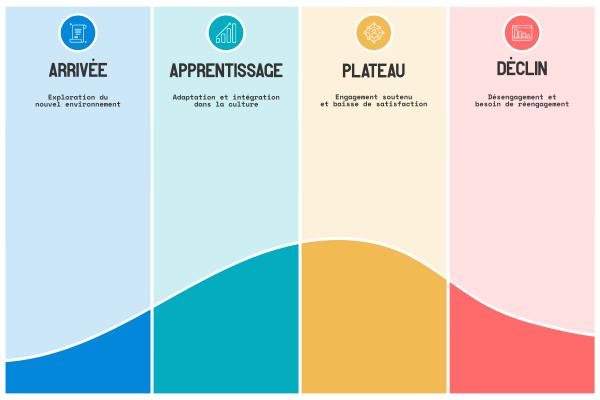
The engagement cycle and the sources of disengagement
Employee disengagement can be understood through two distinct perspectives: the gradual erosion of engagement over time and the sudden loss of motivation caused by a significant disappointment or workplace shock.
Disengagement can happen suddenly, almost like a shock. This form of immediate demotivation is often triggered by a specific event, such as missing out on an expected promotion, seeing recognition given to someone else, or receiving poorly handled negative feedback. These incidents can become turning points, creating a sharp break in an individual’s commitment. The shock perspective suggests that these moments can fundamentally change how a person feels about both their work and their employer.
Erosion of motivation
Engagement can gradually decline when the workplace no longer meets a person’s needs or expectations. Factors such as limited recognition, few opportunities for growth and a growing disconnect between personal values and organisational values slowly weaken enthusiasm and motivation, leading to a subtle but deep form of disengagement.
Motivation is essential to sustaining employee engagement, but it can fade through routine, lack of recognition, and limited challenges or development opportunities. As motivation declines, involvement and job satisfaction decrease, potentially leading to complete disengagement if the situation is not addressed effectively and early enough.
Disappointment
Sudden disengagement can also be triggered by an unexpected disappointment, such as being overlooked for a promotion, missing out on recognition or receiving poorly managed negative feedback. These events can immediately damage commitment, transforming the way someone views both their work and their employer. The shock perspective suggests that these critical moments can dramatically alter an employee’s motivation.
Disappointment becomes a major driver of disengagement whenever expectations remain unmet, whether regarding recognition, career progression or consistency between the organisation’s promises and everyday reality. A disappointed employee can quickly lose trust in their employer, particularly when commitments around working conditions, organisational culture or company values are not honoured.
For managers and executives, understanding these two mechanisms is essential for maintaining high levels of engagement across their teams. This means creating an environment that continually renews long-term engagement while remaining alert to the warning signs of a potential shock, allowing intervention before it results in irreversible disengagement.
What makes the manager’s role even more complex is that engagement is constantly evolving. Over time, and through a lack of challenge, attention or genuine listening, the desire to stay engaged gradually diminishes through a series of identifiable stages.
The phases of the engagement cycle
Managing engagement is challenging because it is never static. Without sufficient challenge, recognition or meaningful attention, people’s willingness to stay engaged gradually declines through several predictable phases.
1. Joining the organisation (exploring a new environment)
When someone joins an organisation, they are usually enthusiastic and motivated to contribute. However, as a new recruit they initially represent a net investment because they require training and time to become fully productive. During this stage, they explore their new workplace, build relationships with colleagues and become familiar with their responsibilities.
2. Learning phase (adaptation and integration)
As people adapt to their new role, they develop a clearer understanding of organisational expectations and gradually integrate into the workplace culture. Their performance improves steadily, while their level of engagement fluctuates depending on the quality of their onboarding experience and their integration into the team.
3. Plateau phase (sustained engagement)
Once individuals have acquired the knowledge, experience and confidence required for their role, they enter a plateau phase. They perform many aspects of their work automatically and competently. If they continue to feel valued, supported and fulfilled, they can maintain a high level of engagement for many years. Development during this stage is usually about refining existing skills rather than acquiring entirely new ones.
4. Decline phase (disengagement)
Eventually, people may feel they have reached the limits of what their role can offer and begin to experience boredom or frustration. They may encounter persistent obstacles, lose the feeling of being valued or simply stop finding meaning in their work. This phase is characterised by declining motivation, involvement and job satisfaction, and may occur more rapidly in individuals who struggle with routine.
5. Re-engagement or departure
At this point, people face a choice. They can re-engage by overcoming challenges and rediscovering satisfaction in their role, or they can leave the organisation in search of new opportunities. The outcome depends on both individual circumstances and the organisational factors that shape engagement.
It is important to remember that the engagement cycle is not linear. People can move forwards and backwards between these phases depending on organisational change, career development opportunities and the quality of relationships with colleagues and leaders.
To see how I use organisational values to re-engage managers and their teams, I invite you to read this case study.