


Fragility wheel
Precariousness, anxiety and extreme paradoxes now shape our working lives, turning fragility into a reality we cannot avoid.
Faced with this era of discontinuities and constant challenges, it is crucial that we overhaul our management and leadership methods. More than ever, we need to develop exceptional agility, master the art of navigating uncertainty and fully embrace change.
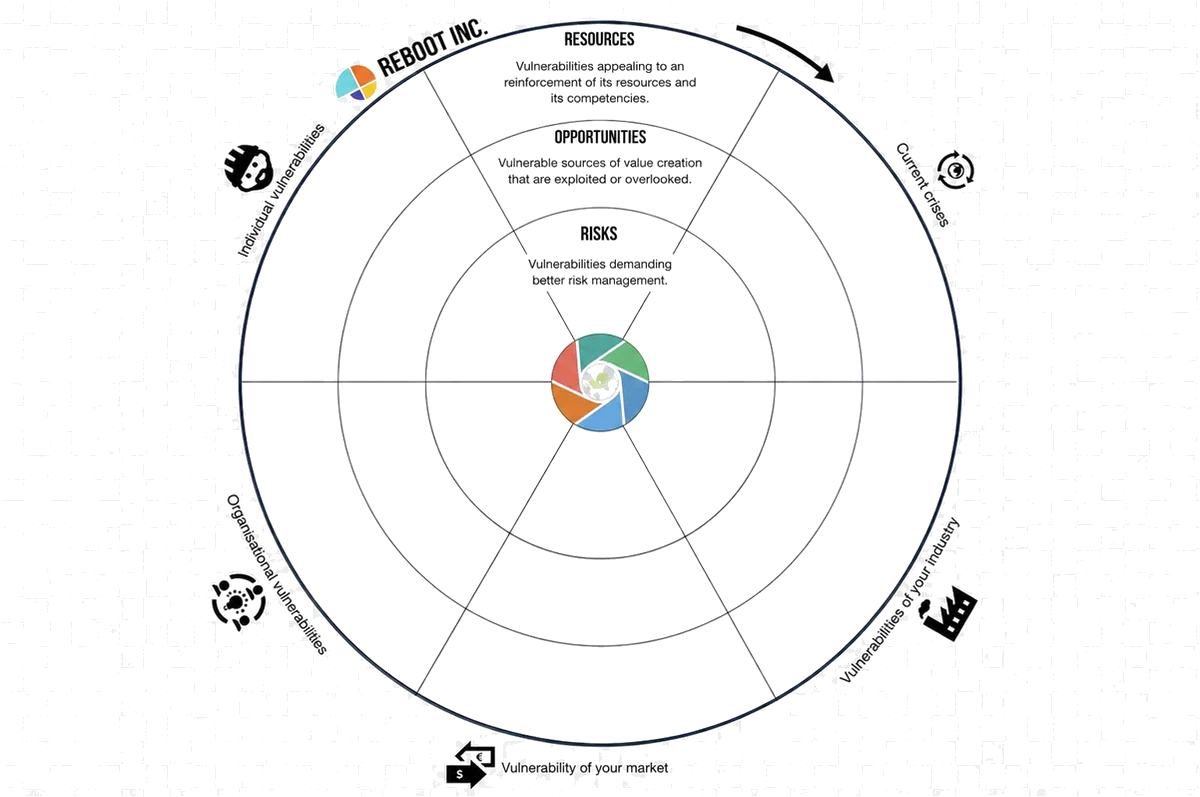
Before any of that, we first need to stop and identify our professional, personal, environmental and cultural fragilities. That is what I developed the fragility canvas and the Fragility Wheel for.
The Fragility Wheel, also known as the Fragility Canvas, is a tool for identifying the crises under way and their effects on your industry, your market, your organisation and, of course, on your own worries, whether you are an employee, a contractor or a business leader.
How to use the Fragility Wheel
Following the direction of the arrow, you work through five steps that progressively narrow the field of reflection and responsibility:
The world ➔ Your industry ➔ Your market ➔ Your organisation ➔ You.
To use this canvas, start with the “Current crises” quadrant and identify as many crises as you can, whether societal, economic, technological, environmental or demographic.
Then, working clockwise, identify your individual fragilities, which tend to surface through your personal worries.
If you have enough time, you can add a layer of complexity by sorting your findings into three levels of fragility:
- Resources – Fragilities calling for stronger resources and capabilities: faced with internal or industry fragilities such as a talent shortage or a technological disruption, the organisation needs to invest in developing its key resources and capabilities. This can include training, recruitment, or partnerships.
- Opportunities – Fragilities that represent commercial opportunities: these market or industry fragilities can turn into competitive advantages if the organisation adapts faster than its competitors. A demanding regulatory change, for example, can become the chance to get ahead through innovation.
- Risks – Fragilities calling for proactive risk management: some fragilities, particularly macro-economic ones such as geopolitical instability or cyber risk, require stronger risk management arrangements. This can include business continuity plans, insurance, or diversifying supply sources.
Putting the Fragility Wheel to work
The Fragility Wheel exercise is designed to give you a structured and systematic way of assessing the threats and opportunities within an organisation. Here are the main objectives of the exercise:
- A complete map of influences and risks: by starting from a global perspective and progressively narrowing the field of analysis down to the individual level, this tool captures a full spread of potential crises that could affect the organisation at different levels. It helps build a holistic view of external and internal challenges.
- Identifying and managing fragilities: by separating out current crises and following a methodical approach to sorting them into resources, opportunities and risks, decision makers can identify where and how to act effectively. This makes it easier to prioritise the work of strengthening internal weaknesses, seizing market opportunities, and mitigating potential risks.
- Strategic development: the exercise helps align resource development strategies, responses to opportunities and risk management with the long-term objectives of the business. It ensures that effort is proactive as well as reactive, helping the organisation stay competitive and resilient.
- Internal engagement and alignment: by involving the different layers of the organisation, from the leadership team through to employees, this tool builds a shared sense of responsibility and commitment to common objectives. It strengthens internal cohesion and motivation across the team.
- Preparation and planning: the exercise improves how ready an organisation is for uncertainty and potential shocks, equipping leaders with the information they need to develop effective contingency plans and adaptation strategies.
All in all, using the Fragility Wheel equips organisations with what they need to anticipate, respond, and thrive in a complex and fast-moving environment.