


Regenerative Management
Regenerative management aims for the employees who join a business to have more scope for development than they have ever had in their past roles, and to leave that business more employable than they were when they arrived.
This turns the business into a genuine investment fund for talent, producing employees who are engaged and who contribute to lasting collective success.
Regenerative management is emerging as an innovative response to the contemporary challenges facing modern businesses. This holistic approach to leadership is built around three fundamental pillars: environmental, social and economic responsibility.
At the heart of environmental responsibility sits the creation of a work environment where employees can flourish psychologically, a space where freedom of expression and innovation are encouraged.
Social responsibility, for its part, aims to transform employees from people who simply carry out instructions into autonomous and accountable contributors, able to take the initiative and to see failure as a chance to learn.
Economic responsibility focuses on preparing employees to be resilient and adaptive in the face of challenges and crises, equipping them with the skills they need to navigate a constantly shifting professional landscape. Together, these pillars form the foundation of regenerative management, a philosophy that reaches well beyond traditional management practice to offer a renewed and sustainable vision of leadership in business.
The pillars of regenerative management
Regenerative management is a holistic approach to leadership that centres on three main responsibilities: environmental, social and economic.
Environmental responsibility
This is about creating a work environment that is stimulating and psychologically safe. The responsibility involves fostering a professional setting in which employees feel free to put forward ideas, express their opinions and show their vulnerability without fear of being judged or penalised. It encourages people to go beyond what they thought they could do and to keep developing their skills, leaving a positive mark on their careers. This goes well beyond simply monitoring the company’s carbon footprint.
Social responsibility
The role of regenerative leaders is to make employees autonomous and accountable. This involves fostering a work environment in which employees can move from simply carrying out instructions to becoming genuine contributors, able to take the initiative, take calculated risks and treat failure as a step towards success. This responsibility encourages managerial innovation and forward planning of talent, where employees are encouraged to build up the knowledge, skills and know-how they need to meet daily challenges.
Economic responsibility
This responsibility aims to make employees antifragile, meaning able to adapt and grow stronger in the face of challenges and crises. It involves taking their whole career into account, from past experience to future potential, making sure they hold the skills and soft skills they need to face what comes. Regenerative managers need to ensure that each crisis strengthens their employees’ capabilities, making them more valuable in the job market.
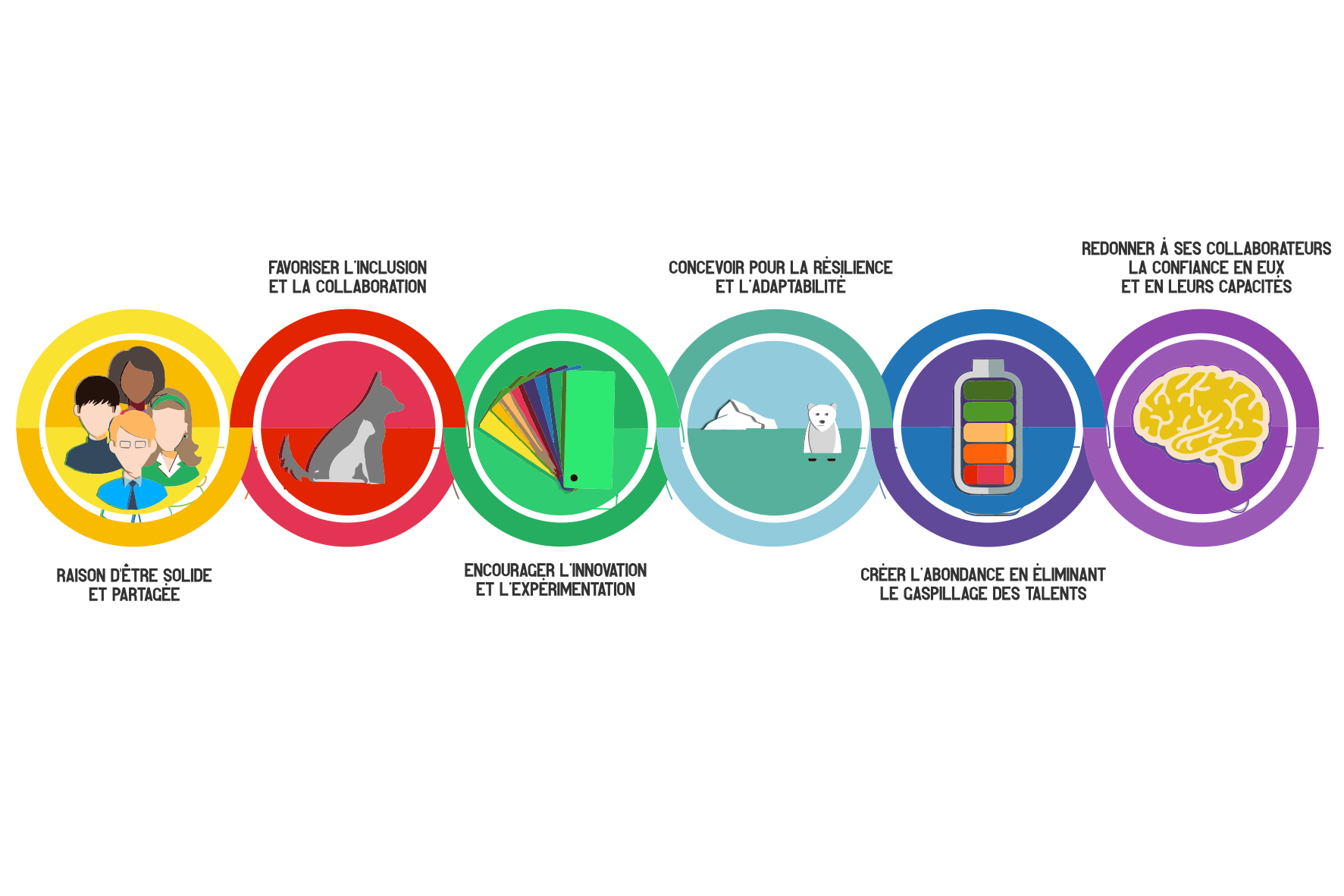
Regenerative management rests on 6 principles
Principle 1 – Cultivate a solid, real, shared and long-term purpose
This principle is about building a company culture around a clear and shared purpose. It is essential that this purpose is anchored in the management practices of the business. Employees need to understand how their work fits into that broader mission and align themselves with it. To make that happen, recruitment processes should favour candidates whose values match those of the business. This is done by asking questions about values, checking candidates’ previous experience, and finding out about their activities outside work and their personal commitments.
Principle 2 – Foster inclusion and collaboration
This principle stresses the importance of inclusion and collaboration, rather than simply diversity and cooperation. It is about valuing and celebrating inclusion in all its forms, including inclusion of thought and experience, not only diversity of background. Organisations that foster inclusion create a culture that is more collaborative and more innovative, and better suited to change. Collaboration is equally essential for breaking down silos, encouraging cross-functional teamwork and dealing with complexity.
Principle 3 – Encourage innovation and experimentation
This principle emphasises encouraging innovation and experimentation in order to create practices that show greater respect for stakeholders and for the environment. Organisations need to be ready to take risks, even where that may lead to short-term failures. For that to work, leadership must provide the necessary resources and support, create a culture that values innovation, and recognise the employees who take risks in order to live by their values. The Enableship approach matters here: it aims to create an environment of trust, give employees genuine responsibility, remove obstacles and provide a creative sanctuary for innovation.
Principle 4: Design for resilience and adaptability
The fourth principle concerns designing organisations and career paths for resilience and adaptability. Regenerative businesses need to be able to withstand and adapt to changes in their environment. This involves being aware of risks and opportunities, being flexible and agile, diversifying recruitment sources, investing in new technologies, and building solid relationships with external partners. It goes beyond maintaining employability, taking into account the whole of a person’s career, their appetences and their soft skills.
Principle 5: Create abundance by eliminating the waste of talent
The fifth principle of regenerative leadership focuses on creating abundance and eliminating the waste of talent. Organisations need to make full use of the skills and capabilities of their employees. To do that, managers first need to understand the appetences of their team. Once that understanding is in place, they can help people build individual career plans based on their talents and skills. Training tied to individual career paths is equally essential for strengthening engagement and confidence in the future. Managers also need to promote a positive work environment that encourages collaboration, communication and creativity.
Principle 6: Give employees back their confidence in themselves and in their capabilities
The sixth principle of regenerative leadership aims to give employees back their confidence in themselves and in their capabilities. Tackling impostor syndrome, which affects many people and particularly during periods of transition, is essential for regenerative managers. They need to create a supportive work environment that encourages people to help and back one another. They also need to recognise the skills and achievements of their employees, which builds confidence and eases impostor syndrome. Sharing and authenticity should be encouraged, so that employees can voice their doubts and uncertainties and realise they are not alone in feeling that way.
Putting regenerative management to work
Regenerative management is an approach that aims to revitalise and renew organisational systems, with an emphasis on sustainability, responsibility and interconnection. Here are some of the ways businesses and managers could use regenerative management:
Sustainable development
Against a background of growing environmental concern, regenerative management gives businesses a way of building ecologically sustainable practices into their daily operations. This goes beyond simply reducing the carbon footprint. It is about rethinking processes, adopting green initiatives and actively committing to preserving our planet for future generations.
Strengthening company culture
A solid company culture is the backbone of any thriving organisation. Regenerative management aims to create an environment where every employee feels valued, heard and encouraged to innovate. It promotes a culture of transparency, authenticity and open communication, where ideas can travel freely and creativity is valued.
Innovation
In a constantly shifting world, innovation is the key to competitiveness. Regenerative management encourages businesses to experiment, to take calculated risks and to step off the beaten track. It is about creating dedicated spaces for reflection, brainstorming and innovation, so the business can stay at the leading edge of its industry.
Training and development
Continuous skills development is essential to personal and professional growth. Regenerative businesses recognise this and offer training on subjects such as sustainability, ethics and social responsibility. That training aims to strengthen technical skills and also to instil a work ethic grounded in regenerative values.
Collaborative leadership
Leadership is no longer limited to giving orders. In a regenerative approach, leadership is seen as a collaboration. Leaders are encouraged to act as facilitators, to listen actively and to value what each person contributes. This collaborative approach creates a more harmonious and more productive work environment.
Human resources management
Employees are the heart of any business. Regenerative management places the emphasis on valuing talent, recognising the unique skills people hold and supporting them in their professional development. This means recruiting individuals who share the values of the business and putting wellbeing programs in place so they can flourish.
Participatory decision making
Decisions are no longer made at the top alone. Regenerative management promotes participatory decision making, where employees at every level are involved. This bottom-up approach ensures that decisions are well informed, relevant and beneficial to the organisation as a whole.