

Rebuilding engagement in Maped's R&D team
Rebirth after the storm: bringing innovation and passion back to life.
- client request
How do you rebuild the engagement of your team when the market is in decline and the internal atmosphere is deteriorating? After the departure of the long standing CEO, a wind of uncertainty and low morale blew through the R&D team of the business.
That situation prompted the R&D director, working with Compagnons de cordée, to take steps to turn things around. The task is to revitalise the R&D team and rebuild team spirit, and also to restore the spirit of innovation and boldness within the team. The mission is to give employees their confidence back, stimulate innovation and recover the engagement and boldness that built the reputation of the business. He wants to bring his team in to redefine the objectives together, rally people around collaborative projects and steer the business towards a promising and prosperous future.
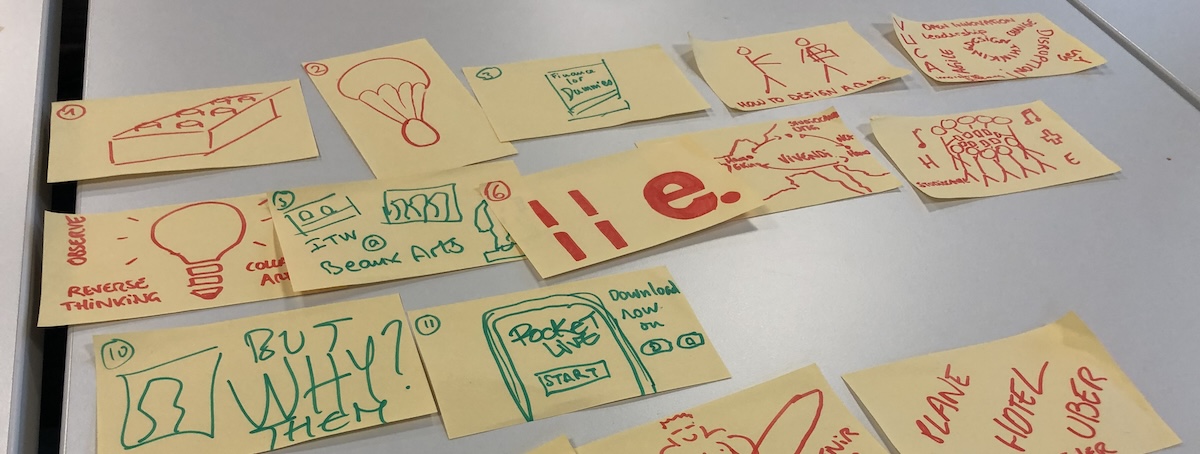
- challenges
In the context Philippe, the client, described, his department currently carries a clear sense of uncertainty and a gloomy internal atmosphere. He faces several significant challenges that need to be overcome quickly.
Rebuild trust and motivation. The first challenge is to revitalise the R&D team so that engagement returns. Trust is the base on which all effective collaboration and all successful innovation rests. Restoring a climate of mutual trust is therefore essential, so that every team member feels valued, heard and supported in their initiatives and their ideas.
Overcome internal obstacles. Internal resistance can be a major brake on innovation and collaboration. Overcoming these obstacles calls for open and honest communication, along with a shared willingness to resolve conflicts and misunderstandings. The R&D director has to play a key role in facilitating that communication and settling internal tensions.
Identify and remove the barriers to innovation. Innovation sits at the heart of the mission of the R&D team. Identifying and removing the barriers to innovation is therefore a major challenge. That can mean rethinking work processes, cutting out unnecessary bureaucracy and promoting a culture where innovation is not only encouraged but also rewarded.
Bring back a culture of boldness and risk taking. Finally, it is essential to bring back a culture of boldness and experimentation within the R&D team. Boldness and risk taking are essential drivers of innovation, and they allow the team to step off the beaten track and explore new paths for developing innovative products.
- stakes
Several issues need to be taken into account if engagement is to return and the challenges identified are to be met. They call for particular attention and immediate action to secure the future and the renewal of the team.
Restore employee wellbeing. The deterioration of the internal atmosphere and the uncertainty within the R&D team have almost certainly had a negative impact on employee wellbeing. Restoring that wellbeing matters a great deal for productivity, engagement and employee satisfaction. A study by the World Health Organisation highlights the importance of mental health for productivity and innovation, noting that investment in the treatment of depression and anxiety generates a fourfold return in better health and capacity to work.
Align the team around a shared vision. Without a shared vision and shared objectives, a team can fragment and lose its direction. Aligning every team member on a shared vision is essential for cohesion, collaboration and collective success. Research by McKinsey has shown that teams which share a common vision are more likely to deliver exceptional performance.
Assess the management relationship. The dynamic between the R&D director and his team is another major issue. A healthy and positive management relationship is fundamental to employee engagement and satisfaction. A Gallup study found that a supportive and understanding manager can significantly increase employee engagement, a key element in driving innovation and productivity. The objective is to make Philippe what I call an "Enabler".
- solution
Listening & sharing
Run listening sessions to understand the concerns, the worries and the aspirations of the R&D team.
Workshops & co-creation
Encourage collaboration between the R&D, sales and marketing teams so they build innovative solutions together.
Disruption & radical thinking
A team challenge to find new ways of working together and to overcome internal resistance to change.
Pilots & experiments
Launch pilot projects to test new ideas, with tolerance for failure, in order to encourage risk taking
- results
One month after the support programme, the changes within the R&D team are tangible and significant.
People speak up again and absences have dropped sharply. The atmosphere in the team has improved markedly, which shows in lower absenteeism and a clear rise in job satisfaction. Team members now show renewed morale and feel that their manager is on their side. They are ready to take on challenges with fresh energy and motivation.
Alignment around a shared vision. The R&D team has united around a clear and inspiring shared vision. That alignment removed the ambiguities and strengthened team cohesion, which allows smoother and more effective collaboration. The objectives that were set are now clear to everyone, and every team member works in concert to reach them.
Better relationships between the manager and his team. Open and honest communication has been established, which supports a work environment where every employee feels valued and heard. This improvement in management relationships had a direct impact on the engagement and the productivity of the team.
Innovation is stimulated. With the barriers to innovation identified and removed, a flow of new ideas emerged, feeding a pipeline of promising projects for the future of the business. Boldness and risk taking are valued again, creating a dynamic that supports continuous innovation.
TO ORGANISE A KEYNOTE, A WORKSHOP OR A MASTERCLASS