


Homo Digitalis
Homo Digitalis is someone who uses digital technologies effortlessly, adapts quickly to emerging innovations, and naturally weaves digital tools into everyday life. The trade-off, however, can be significant, with mental wellbeing often paying the price.
However, it is important to recognise that Homo Digitalis is not defined solely by the way people use digital technologies. It is also shaped by the social, economic and cultural changes that have accompanied the rise of the digital age. For example, people who fit this profile are often more engaged with issues such as diversity, inclusion, environmental sustainability and mental wellbeing.
Digital transformation now influences almost every aspect of our lives, from the way we work and learn to how we socialise and spend our leisure time. It promises significant benefits, including greater efficiency, increased convenience and access to opportunities that were once out of reach. At the same time, it introduces new challenges, particularly for our mental and emotional wellbeing.
Alongside digital transformation has come another defining concept: disruption. Disruption describes the way emerging technologies and new business models overturn established industries, organisations and social norms. It can drive remarkable innovation and economic growth, but it also creates uncertainty, accelerates change and forces individuals and organisations to continually adapt.
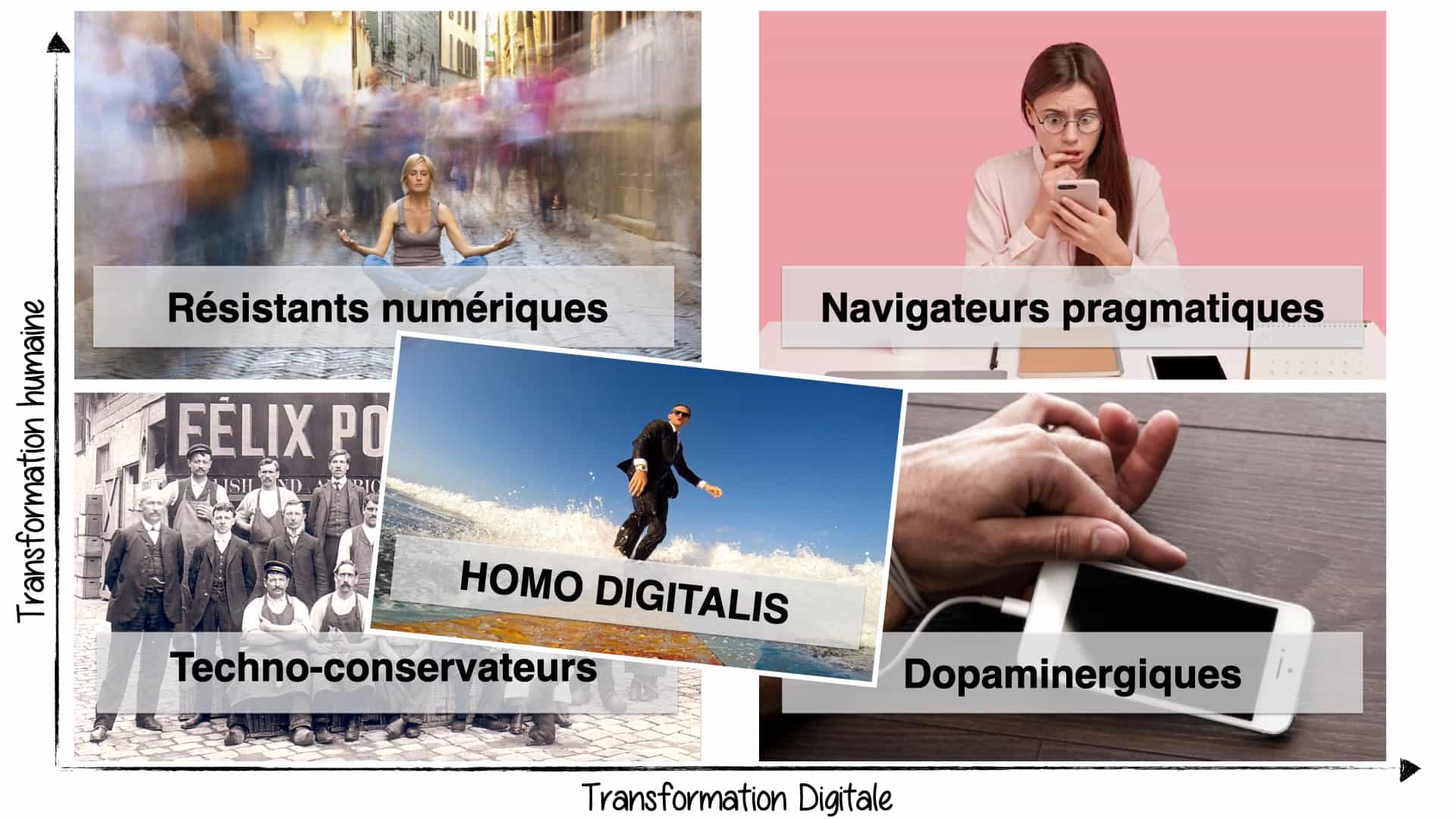
The Four Profiles of the Digital Human
The idea of Homo Digitalis emerged in the middle of the ongoing wave of digital transformation and disruption. Many people are questioning where they fit in this new environment. They want to contribute positively to society, yet they wonder whether their job will still exist in five years. They want to build new skills, but they are unsure which capabilities will matter in the future. They want to keep learning and growing, yet they find it harder to concentrate and read deeply than they once did. These Homo Digitalis, who are able to balance the use of mobile technologies with their psychological wellbeing, should not be confused with the “Homo Numericus” described as the civilisation to come.
To better understand the personal and human impact of digital transformation, it helps to look at four different ways people respond to digitalisation and constant connectivity.
- The Optimistic Perspective: This view sees digitalisation as an opportunity for growth and innovation. It focuses on the benefits of technology, including greater access to knowledge, stronger connections and new opportunities.
- The Pessimistic Perspective: This approach highlights the risks and challenges of digitalisation. It draws attention to the negative effects that excessive technology use can have on mental and emotional wellbeing, including anxiety, isolation and declining self-esteem.
- The Pragmatic Perspective: This perspective seeks a balance between the benefits and drawbacks of digitalisation. It embraces the opportunities technology creates while remaining aware of its limitations and unintended consequences.
- The Human-Centred Perspective: This approach emphasises the importance of preserving our humanity in an increasingly digital world. It encourages us to stay connected to our values, our relationships and our fundamental human needs.
To better understand where we stand and weigh the benefits and trade-offs of digitalisation in our working lives, I explored these four perspectives. From this work, I identified five distinct digital profiles.
Tech Conservatives
These are people who grew up before the digital era and retain a more traditional worldview. They adopt technology so they are not seen as being left behind, but they do not necessarily use it to its full potential. Their adoption tends to be superficial rather than transformative. Technology is something they use because they have to, not because they genuinely want to.
Digital Resisters
This profile describes capable professionals who consciously choose to protect themselves from the constant pull of the internet and digital technology. They value human interaction and proven ways of working. They prioritise quality, craftsmanship and authenticity. Technology is used selectively and intentionally, helping them avoid information overload and digital distraction.
Pragmatic Navigators
These individuals are fully connected through the internet and social media, yet they have little interest in standing out or building a personal digital identity. They use technology because it is practical and convenient rather than because it inspires creativity or innovation. They generally follow trends instead of questioning or reshaping them.
The Dopamine Seekers
People who are permanently connected and constantly chasing the next digital novelty can be described in several ways, each highlighting a different aspect of their behaviour. Whether they are hyper-connected users, digitally dependent individuals, techno-enthusiasts or people driven by the fear of missing out (FOMO), they all share a fascination with technology that can interfere with other areas of life, including wellbeing, personal relationships and financial health. Their behaviour is often fuelled by an endless search for stimulation, information, social validation or innovation, sometimes at the expense of everything else.
Homo Digitalis
This profile combines breadth with depth. These individuals are both generalists and specialists, curious about the world yet capable of sustained focus. They are highly skilled, passionate, independent and collaborative. They use digital connectivity with purpose, pursuing clear goals without becoming distracted. They move confidently between the physical and digital worlds, using technology as a tool to enrich both their professional and personal lives. They are often recognised as innovators and thought leaders in their field.
Applying the Homo Digitalis Framework in My Work
The Homo Digitalis framework can support organisations, leaders and HR professionals in several practical ways.
Improve Recruitment and Selection
By understanding the different Homo Digitalis profiles, recruiters can better identify candidates whose digital capabilities, learning mindset and relationship with technology match the organisation’s needs.
It can also reshape learning and development. HR professionals can tailor development programmes to suit each digital profile. For example, Tech Conservatives may benefit from building confidence with emerging technologies, while Digital Resisters may gain more value from learning how to use technology selectively and intentionally without compromising their preferred ways of working.
Adapt Performance Management
Managers can incorporate digital profiles into performance conversations. Pragmatic Navigators, for example, might be assessed on how effectively they use technology to improve productivity, while Homo Digitalis profiles could be recognised for their ability to innovate, experiment and create value through digital tools.
Increase Employee Engagement
HR teams can use the Homo Digitalis framework to better understand how different people engage with digital work. Tech Conservatives may need additional support as new technologies are introduced, while Digital Resisters may value greater autonomy in choosing which digital tools best support their work.
Build a Modern Workplace Culture
Business leaders can use the Homo Digitalis framework to create a workplace culture that values different relationships with technology. By recognising and respecting these diverse profiles, organisations can foster a more inclusive, innovative and collaborative environment where technology supports people rather than defining them.