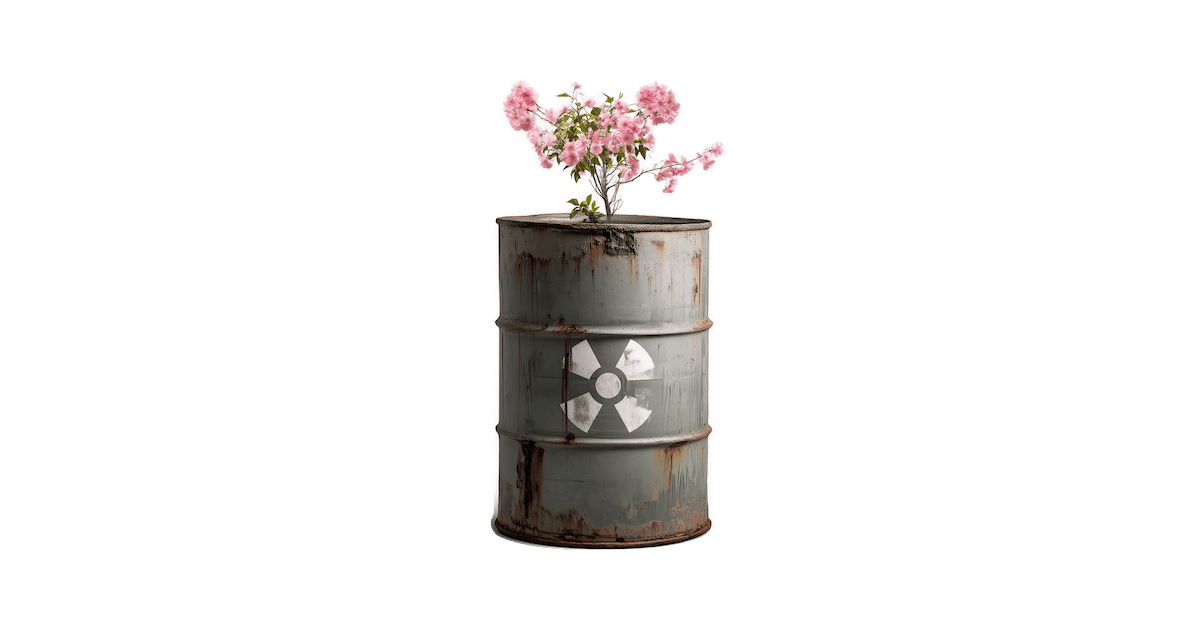
Why are some organisations fertile ground for innovation, collaboration and performance, while others feel like swamps of frustration, heaviness and suspicion? The answer usually sits in culture, the one invisible factor that decides everything else. A toxic work culture rarely announces itself. It shows up as silence in meetings and as good people leaving.
Company culture behaves like an ecosystem. It can be alive, dynamic and good for the people inside it, or it can be smothering and slow the whole organisation down. Two forces compete inside that fragile balance, and most leadership teams can only name one of them.
Cultural toxins are the negative elements that poison relationships, restrict creativity and push people towards disengagement or the exit. Cultural accelerators are the levers that lift motivation, strengthen commitment and create an environment where people give their best. An organisation that wants to thrive has to detect and neutralise its toxins while injecting the right accelerators.
| What gets blamed | What is actually happening | The shift that transforms |
|---|---|---|
| A toxic work culture blamed on peopleWhen engagement falls, the explanation usually lands on individuals: a difficult manager, a cynical team or a generation that will not commit. That reading is comfortable, it fits an exit interview and it changes nothing. | Conditions, repeated until they setFear, micromanagement, opacity, silos and complacency are conditions rather than personalities. In Australia several of them are named psychosocial hazards under the model work health and safety framework, which places them under a duty of care. | Swap each toxin for its acceleratorBenjamin Chaminade’s position: you cannot add positives on top of unrepaired negatives. Name the toxin, name the accelerator that replaces it, and change the management behaviour that feeds it. Repainting a house with cracked walls achieves nothing. |
The cultural toxins that poison an organisation
Cultural toxins drain motivation, create conflict and slow innovation to a crawl. Identifying them is the first step towards turning an ineffective culture into a dynamic one. Each toxin below comes with the signs you can observe yourself, without a survey and without a consultant in the room.
Fear and mistrust freeze every idea
When fear settles into an organisation, it becomes a poison that kills creativity and initiative. A blame culture, where every error gets punished rather than analysed, pushes people into self-censorship. Nobody proposes new ideas, nobody takes risks and nobody questions a decision made above them.
- People avoid asking questions or offering an opinion in front of anyone senior.
- Innovation stops entirely, because nobody wants to carry the risk.
- Internal communication happens on eggshells, with every message read twice before sending.
- People lower their voices when footsteps approach in the corridor.
The concrete version is ordinary. Someone has a good idea for improving a process and decides to stay quiet, because raising it means being criticised or creating trouble with their manager. The idea does not die in a committee. It dies before it is ever spoken.
Micromanagement removes the oxygen
Micromanagement happens when a manager wants to control everything, validate everything and decide everything. Teams lose all autonomy, every decision takes an age and motivation drains away. The manager usually believes they are being rigorous, and the team experiences something entirely different.
- A manager who asks to be informed about everything, all the time.
- People waiting for approvals instead of acting on what they already know.
- A heavy atmosphere where nobody feels free to take an initiative.
The cost compounds inside the calendar where nobody looks. Time spent waiting for a decision is time nobody records anywhere, so the problem never appears on a dashboard and never enters a budget conversation.
Opacity turns decisions into rumours
An organisation where decisions land from above with no explanation is an organisation where trust erodes fast. When people do not understand the vision or the reasons behind strategic choices, they feel pushed aside and they disengage. The information vacuum fills itself with something worse.
- Strategic decisions announced with neither consultation nor explanation.
- Staff discovering major changes through rumours or through the press.
- No communication at all about objectives or the direction being taken.
Opacity is rarely a deliberate strategy. It is usually the by-product of an executive team that finds explaining harder than deciding, and that underestimates how quickly an unexplained decision becomes an assumed motive.
Silos and internal politics slow everything down
In some organisations, teams work in sealed compartments and regard each other with suspicion. They compete instead of collaborating. Projects slow down and the atmosphere turns heavy. The competition is often rewarded by the very structure that complains about it.
- Departments that do not share information and advance separately.
- A territorial war where each team defends its perimeter instead of aiming at a shared objective.
- An internal political culture where advancement depends more on networking than on results.
Watch where recognition goes and you will predict the level of cooperation. An organisation that celebrates individual performance exclusively has already chosen silos, whatever its values poster says.
Resistance to change and complacency
Two toxins usually arrive together late in an organisation’s life. Resistance to change blocks anything new from entering, and complacency removes any appetite to go looking for it. Both of them feel like stability from the inside, and both of them look like decline from the outside.
“We have always done it this way” is the kiss of death for any organisation that wants to evolve. A company that refuses change exposes itself to a slow and inevitable decline, visible in blocked decisions, systematic rejection of new ideas and a total absence of questioning about existing processes.
Complacency is born when an organisation stops trying to improve, convinced it is already good enough. It shows up as excessive satisfaction with current results, no long term vision and no stimulating objectives for teams. That is usually the beginning of the end.
In Australia these toxins are named hazards rather than preferences
Australian employers have a reason beyond culture to take this seriously. Several of the conditions described above appear by name in the work health and safety framework. That turns a cultural conversation into a legal duty. It also gives a people leader an argument that survives contact with a board.
What the model code names
Safe Work Australia published model work health and safety regulations and a model Code of Practice on managing psychosocial hazards at work in November 2022, placing psychological health inside the same duty of care as physical health. Jurisdictions then adopted it, with Queensland’s code commencing on 1 April 2023.
The named hazards map directly onto the toxins in this article. They include high or low job demands, low job control, poor support, low role clarity, poor organisational change management, low reward and recognition, poor organisational justice, and poor workplace relationships including interpersonal conflict. Safe Work Australia sets out the duty.
Read that list beside the toxins above and the overlap is close to complete. Micromanagement is low job control, blame culture is poor organisational justice and poor support, opacity is low role clarity and poor organisational change management, and silos are poor workplace relationships. The vocabulary changes and the condition does not.
What that changes for a manager
It changes the conversation from taste to obligation. A manager arguing for more autonomy on the grounds that people prefer it will lose to a delivery deadline. The same manager pointing at low job control as a named psychosocial hazard has a different standing in the room.
It also changes what gets measured. Psychosocial risk has to be identified, assessed and controlled like any other hazard. An organisation can no longer treat culture as a soft subject reviewed once a year in an engagement survey.
The practical effect for Australian leaders is a floor. Whatever your culture ambition, the conditions named in that code are ones you have a duty to control. Your ambition starts above that floor.
The cultural accelerators that replace them
A high performing culture does not rest on rigid processes. It rests on a handful of elements that encourage commitment, trust and innovation between people. These accelerators are the vitamins that let an organisation thrive and adapt to whatever its market decides to do next. The same ordering of people ahead of process runs through my work on innovation strategy that starts with people.
Trust and transparency form the base
Without trust there is no effective collaboration. A culture built on transparency and open dialogue lets people understand decisions, offer their view and feel involved in what happens next. Everything else in this list depends on this one being in place first.
- Clear communication about the objectives and the strategy of the organisation.
- Regular feedback between managers and their teams, in both directions.
- Fewer corridor rumours, replaced by information that arrives officially.
Buffer publishes every salary in the company openly and shares major decisions with its teams. That remains one of the most tested examples of radical transparency in practice. Few organisations will go that far, and the direction of travel is what matters.
Autonomy and accountability lift motivation
Giving teams the power to decide and to act lets them commit fully to their own work. An organisation that values autonomy attracts talent and stimulates creativity, provided that autonomy arrives with genuine accountability attached rather than with quiet abandonment.
- People taking initiative without waiting for approval from above.
- A culture where experimentation is encouraged, even when it produces failures.
- Decisions made as close to the work as possible, with no administrative drag.
Reed Hastings and Erin Meyer describe this trade in their book No Rules Rules, where Netflix managers give teams great freedom and expect a high level of responsibility and results in return. Freedom without the second half produces chaos rather than culture.
An inspiring purpose gives work meaning
Organisations that succeed sell more than products or services. They embody a mission that inspires the people inside and the customers outside. A strong sense of why aligns everyone towards a shared objective without needing a new process to enforce it.
- Every person understands why their work has an impact.
- Recruitment runs more smoothly, because the organisation attracts people who share its direction.
- Strategic decisions stay coherent with a long term goal instead of with the last quarter.
Purpose fails when it lives only in the annual report. The test is whether a team can use it to decline something, because a purpose that never rules anything out is only decoration.
Celebrating successes and learning from failure
Recognising wins encourages performance and costs almost nothing. Valuing failures lets an organisation learn and improve its processes without ever creating a climate of fear. Doing only the first produces a culture that performs well right up until the day something serious goes wrong.
- Rituals that celebrate successes, both small and large.
- A culture that treats failure as a learning opportunity and never as a sanction.
- Post-mortems after each project to analyse what worked and what can improve.
Google’s engineering practice of blameless post-mortems is the best known version, where the analysis examines the system that allowed the failure rather than the person present when it happened. That single rule changes what people are willing to report.
Cooperation across boundaries breaks silos
High performing organisations bet on synergy between their teams rather than inside them. They encourage the exchange of ideas and interdisciplinary collaboration, which stops departments operating as rival micro-companies inside one organisation. The structural fix usually beats the interpersonal one.
- Cross-functional projects where different teams work together from the beginning.
- Spaces and tools that support collaboration, alongside regular meetings between departments.
- Recognition of collective contributions ahead of individual success.
At Pixar, writers, animators and technicians collaborate from the start of a project, which avoids problems surfacing at the end of production. I have written about the mechanism behind it in the Pixar Braintrust.
Experimentation becomes a habit
An organisation that adopts a test and learn culture stays agile as its market moves. Regular experimentation lets it innovate without waiting for everything to be perfect, and it lowers the cost of being wrong to something an ordinary team can absorb.
- A rapid prototyping mindset, where things get tested before anyone invests heavily.
- A culture where people can propose and test new ideas without a business case first.
- Follow-up on experiments, so the organisation extracts lessons it can act on.
Amazon built experimentation into its operating culture, testing many features at small scale before generalising them. The discipline that matters is the follow-up rather than the test itself, because an experiment nobody reviews is just an expense.
Field note
Starting a culture conversation from measured trust
At Yamaha Motor France I ran a values identification workshop and a leadership committee session at Cabourg, inside a wider management transformation programme. The materials for that day were built on Great Place To Work Trust Index data rather than on my own impressions of the organisation, and that choice shaped everything that followed.
Working from measured data changes the room. A consultant arriving with a diagnosis invites a debate about the diagnosis, and a leadership team looking at its own trust scores has nothing to argue with. The conversation moves straight to what to do. That is where the value sits.
The programme itself was built on four layers: the reason the organisation exists, management by values, mutual knowledge between colleagues through my Talentstorming workshop, and the talent cycle. Values came second, because values stated before people know each other stay abstract.
The lesson I carry into every culture engagement: measure before you interpret, and let the organisation’s own numbers set the agenda for the workshop. A toxin named by the data is a problem the leadership team owns. A toxin named by the consultant is a problem they can dispute for another six months.
Swap the toxin for the accelerator: which move comes first?
An organisation cannot simply add positive elements without dealing with the underlying problems. That is like repainting a house without repairing the cracks in the walls. The four swaps below are the ones I see pay back fastest, and the table sets out what each one actually demands.
The four swaps that pay back fastest
Four exchanges carry most of the change: micromanagement for autonomy, silos for collaboration, fear of risk for a test culture, and opacity for transparency. Each one replaces a named condition rather than adding an initiative, which is why they cost less than a culture programme and move faster.
| Swap | Why the toxin hurts | What replacing it demands | First visible sign |
|---|---|---|---|
| Micromanagement to autonomy | It smothers initiative and slows decisions, because every detail waits for a superior to validate it. | Delegating clear responsibilities, setting objectives instead of tasks, and coaching rather than checking. | A decision made without asking, and a manager who lets it stand. |
| Silos to collaboration | Departments become rival micro-companies, which slows innovation, creates conflict and delays delivery. | Cross-functional project teams, shared collaboration tools, and recognition that rewards collective results. | A team volunteering information another team has not asked for yet. |
| Fear of risk to a test culture | When risk gets punished, innovation stops and people apply existing processes even when those processes fail. | Valuing experiments, running post-mortems that examine the system, and treating error as part of the work. | Someone reporting a failure early, before anyone else has noticed it. |
| Opacity to transparency | Decisions taken in private generate rumours, exclusion and a slow loss of motivation across the organisation. | Regular sessions where leadership explains its choices, open channels for questions, and genuine consultation. | A difficult question asked out loud in a large meeting rather than afterwards in the corridor. |
How to sequence the swaps inside a toxic work culture
Sequence matters more than ambition. Running all four swaps at once produces four half-finished initiatives and a team that has stopped believing any of them. Pick the one whose first visible sign you could plausibly see within a quarter, and start there.
- Choose the toxin your own people name first when asked in private, rather than the one your engagement survey ranks highest.
- Identify the management behaviour that feeds it, and name the person whose behaviour has to change, starting with yourself.
- Agree the accelerator that replaces it, in a single sentence anyone in the organisation could repeat.
- Define the first visible sign, and give it one quarter to appear.
- Only when that sign appears, start the second swap, and keep the first one under observation.
Culture does not change overnight, and each action counts. The question worth asking today is which single accelerator you could put in place this week without asking anyone’s permission.
How I can help you master this topic
Identifying toxins with clarity is one job, and replacing them inside a real organisation with real habits is another. That second job is the one I do with executives and their managers, and it runs through two formats that work together.
A culture scan to identify the toxins honestly
Before transforming anything, you have to understand what is holding the organisation back. A rapid culture audit brings to light what your culture makes possible and what it prevents, using targeted qualitative interviews, a mapping of real management practices, and an analysis of cultural maturity.
The objective is precision. You leave with the toxins named specifically, whether that is micromanagement, opacity or inertia, and with their operational impact identified rather than asserted. That gives a leadership team something it can act on instead of something to debate.
Workshops that build the accelerators with your managers
A cultural transformation cannot be decreed. It gets built with managers rather than against them, which is why I run participative formats where the levers are identified collectively and the work lands on behaviour instead of on a values statement.
The workshops cover toxins against accelerators, a diagnostic of current management behaviours, and work on the internal stories and the values actually lived. For organisations wanting to anchor the change over time, I combine that with keynotes and a longer management pathway. Tell me about your situation and we will work out which format fits.
Start with the behaviour that kills ideas fastest
Toxins are easier to name than to remove, because each one is protected by a habit somebody senior finds comfortable. If you want the diagnostic view of who closes ideas down and how to work around them, read my article on innovation killers before you run your first workshop.
A toxic work culture is a choice your organisation keeps making
A company culture is never fixed. It can hold an organisation back or it can propel it, and the direction is decided by behaviours repeated daily rather than by a values statement approved at board level. Every one of the toxins in this article survives because something in the system rewards it.
The Australian framing helps here, because it removes the argument about taste. Low job control, poor organisational justice, low role clarity and poor workplace relationships are named psychosocial hazards, which makes their management a legal duty.
So the honest question is not whether your culture is perfect. It is which toxin you have decided to tolerate, and what it is costing you in ideas that never get spoken. A toxic work culture is rarely inherited. It is maintained, one tolerated behaviour at a time, and it can be dismantled the same way.
Frequently asked questions about a toxic work culture
These are the questions leaders ask me once they accept that their culture problem is structural rather than personal. Each answer is short enough to use in a leadership meeting, and each one points at something you can change without waiting for a transformation budget.
What is the difference between an irritant and a real cultural toxin?
An irritant annoys people and leaves behaviour unchanged. A toxin changes what people do: they stop proposing, stop reporting problems early or stop volunteering information. If a condition alters behaviour across several teams rather than upsetting individuals, treat it as a toxin.
Are cultural toxins a legal matter in Australia?
Several are. Safe Work Australia published model work health and safety regulations and a model Code of Practice on psychosocial hazards in November 2022. They name low job control, poor support, low role clarity, poor organisational justice and poor workplace relationships among the hazards employers must control.
Can you add accelerators without removing the toxins first?
Rarely with any success. Adding positive initiatives on top of unrepaired conditions is like repainting a house with cracked walls. The initiative gets read as a distraction, and the cynicism that follows makes the next attempt harder than the one before it.
How long does a culture change take to show?
Pick one swap and give it a quarter. The first signal is behavioural rather than statistical: a decision made without approval, a failure reported early or a difficult question asked out loud. Engagement scores move later, and they move because the behaviour moved first.
Where should a manager with no budget start?
Start with how you react to the next risky idea, because that reaction is free and it is watched closely. Then remove one approval step that exists only for your own comfort. Both moves are inside a manager’s control and both change what a team believes about the cost of speaking.