In the last twelve months, has anyone been visibly rewarded for raising a problem that was inconvenient? And has anyone been penalised, without it ever being said out loud, for delivering bad news?
Those two questions are worth every culture survey you will ever run. The whole organisation already knows the answers. People watched what happened and drew their conclusions long before the leadership thought to ask the question.

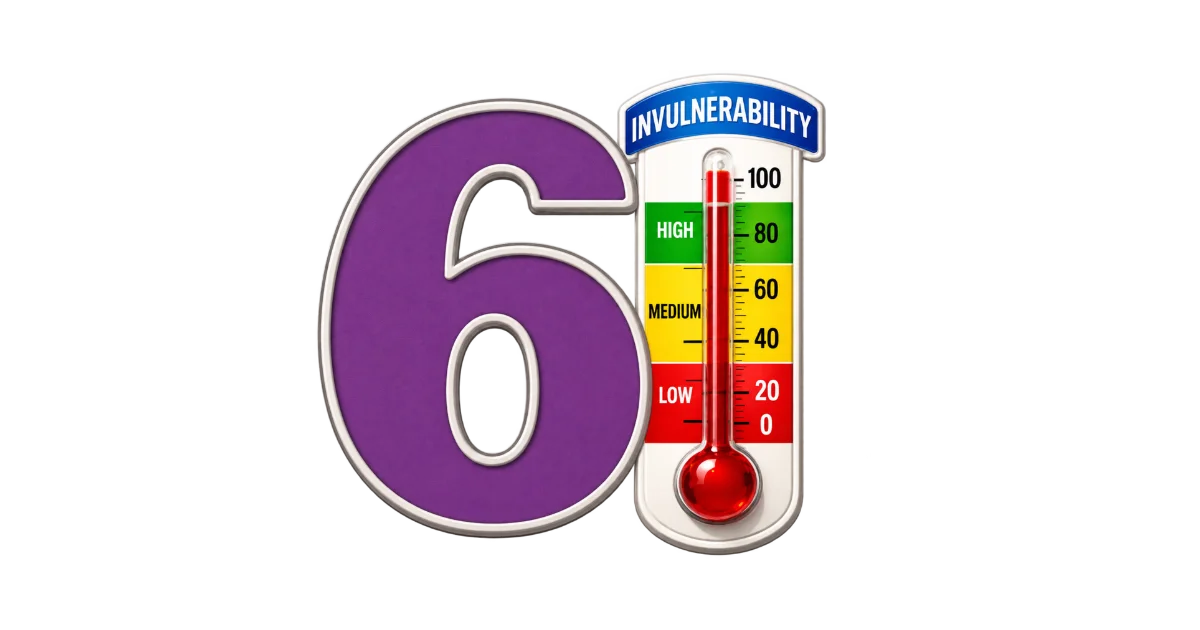
A culture of internal dissent is the sixth of the eight pillars of the invulnerable company. It rests on what the research calls psychological safety at work, and it is the condition without which no reporting arrangement ever produces anything except polite reports.
| The asymmetry | The measure | The proof |
|---|---|---|
| Speaking costs the speakerOrganisational silence is neither a failure of courage nor a moral fault. It follows from a rational asymmetry: speaking up carries an immediate and certain personal cost, staying quiet carries a deferred and diffuse collective one that nobody can attribute. | A shared climate, not individual confidencePsychological safety at work describes a belief shared inside a team about the consequences of interpersonal risk. It is measured by questionnaire, it predicts learning behaviours, and those behaviours predict performance. | What became of the last dissenterThis pillar is not diagnosed by opinion survey. It is diagnosed by observing one fact. What happened to the last person who publicly contradicted the leadership carries more weight than any stated value, because the whole organisation watched it. |
Why nobody speaks, and why courage is the wrong explanation
No executive team declares that it values compliance and agreeableness. Most organisations produce silence anyway, and the explanation that blames a lack of courage in the teams is flattering to the leadership and wrong. The cause is structural and it can be changed.
The asymmetry of costs
For a person who sees a problem, the decision to speak follows a simple calculation. Speaking carries an immediate and probable personal cost: friction with a manager, a reputation for negativity, and exposure if the judgement turns out to be wrong. Staying quiet carries a deferred collective cost that nobody can pin on them.
Faced with that asymmetry, silence is the rational behaviour. Your colleagues are not short of courage. They have learned from experience that the ratio between the cost and the benefit points the wrong way.
Reading it this way changes the whole approach. An organisation that asks its teams to be braver is asking them to absorb personally a cost the structure should be removing. Building this pillar means inverting the asymmetry, and it never means demanding heroism.
What internal dissent is not
Internal dissent does not mean permanent objection, organisational anarchy or a general right of veto. An organisation where everyone contests everything stops deciding, and that confusion is regularly used as an argument by the people who prefer the silence.
It means an institutionalised capacity to say the organisation is heading the wrong way, and to be heard. It sits perfectly well alongside fast decisions and disciplined execution, provided the disagreement is expressed before the decision rather than after it.
It is also compatible with a high bar. The configuration that produces the strongest performance combines demanding standards with real psychological safety, and it is a combination rather than a compromise between the two.
Field note
The refuted hypothesis that founded the concept
In the mid 1990s a doctoral student at Harvard Business School studied the relationship between the quality of teamwork and medication errors across two hospitals. Her hypothesis was obvious: better teams make fewer errors. She spent hundreds of hours building the questionnaire, tracking reports and interviewing clinicians.
The result contradicted the hypothesis. The teams rated best on the team diagnostic reported higher error rates rather than lower. Amy Edmondson has described sitting in front of her screen convinced she had failed, and dreading telling her supervisor and the doctors attached to the study.
The interpretation that followed founded the whole field. The better teams were not making more errors, they were more willing to talk about them. The weaker teams concealed, minimised or simply did not report. The concept was formalised in 1999 in a paper in Administrative Science Quarterly covering fifty-one industrial teams.
An organisation that reports few problems does not have fewer than the others, it reveals fewer. The number of reports is therefore an indicator of psychological safety and never an indicator of quality. A leader congratulating the business on a fall in reported incidents may be measuring the exact opposite of what they think they are measuring.
What the research actually measures
The subject suffers from a reputation for softness that does it no favours. The term suggests wellbeing and workplace atmosphere, while the literature underneath it is quantitative and its results have been stable for twenty-five years across very different industries.
Psychological safety at work, definition and measurement
Amy Edmondson, professor at Harvard Business School, defines psychological safety as a belief shared inside a team that it is acceptable to take interpersonal risks there: asking a question, requesting feedback, reporting an error or proposing an idea.
Two clarifications matter, so you work on the right thing. The word shared means this is a team climate and not an individual trait, which separates psychological safety at work from personal confidence and from interpersonal trust between two people.
It is measured with a short questionnaire administered at team level, using statements such as: on this team, people are often blamed for a mistake. The causal chain established afterwards is consistent. Psychological safety predicts learning behaviours, and those behaviours predict performance.
What large scale observation confirms
Google ran a two year internal research program, Project Aristotle, across one hundred and eighty of its own teams, to identify what separates the effective ones from the rest. The result surprised its own analysts, who had expected the answer to lie in who was on the team.
Team composition, individual expertise and allocated resources were not the main predictor. Psychological safety came out well ahead of every other factor measured, and Google published the finding along with the five dynamics it identified.
This is Google’s own research on its own workforce rather than an independent study, which is worth holding in mind. What makes it useful is the convergence: an internal program with commercial motives arrived at the same place as twenty-five years of external academic work.
The consequence for an executive team is direct. Strengthening the psychological safety of a team produces more effect on its performance than improving its composition, which inverts the usual order of managerial investment.
The four mechanisms that install dissent
This pillar is not built by an offsite, a charter or a statement from the chief executive at the annual meeting. It is built by arrangements that change the asymmetry of costs, and by the repeated example of the leadership. Both halves are required.
Four arrangements that work
These four mechanisms act on different levers. The first two reduce the cost of speaking. The next two raise the cost of silence. Installing one without the others produces a partial effect, and installing the fourth alone produces the largest shock.
- A challenger role assigned by rotation in the executive meeting, charged with building the strongest possible argument against the decision on the table. Disagreement stops being a personal act and becomes a function.
- A reporting channel independent of the direct reporting line, with documented handling and a systematic response to the person who raised the issue, including when the report is set aside.
- A periodic review dealing explicitly with the information that did not travel upward, and with the reasons it did not. The subject becomes a management obligation rather than a good intention.
- An audit of the last round of promotions, to check whether the people promoted are the ones who contradicted or the ones who agreed. It is the simplest mechanism, the most revealing, and the least often run.
What Australian law already requires of you
Two of those four mechanisms are partly obligations in Australia rather than optional good practice, which changes the conversation with a reluctant board. The argument stops being cultural and becomes a compliance question with a regulator attached to it.
Under work health and safety law, a person conducting a business or undertaking has a positive duty to eliminate or minimise psychosocial risks so far as is reasonably practicable. The model code of practice on managing psychosocial hazards at work sets out how, and it treats consultation with workers as a required part of the process rather than an optional extra.
One caution on that code. It only has legal effect in a jurisdiction that has approved it, so the position varies between states and territories. Check with your own regulator before you rely on it in a board paper.
The whistleblower protection regime in the Corporations Act covers the second mechanism. Public companies and large proprietary companies must have a compliant whistleblower policy, and protected disclosures can be made outside the direct reporting line. That obligation exists whether or not the culture supports it, which is exactly the gap this pillar closes.
What the leadership has to do itself
None of these arrangements works if the behaviour of the leadership contradicts them. A chief executive who reacts with irritation to an objection in a meeting cancels six months of mechanism in thirty seconds, and everyone in the room updates accordingly.
Two behaviours produce the opposite effect and can be practised immediately. State your own uncertainties publicly instead of projecting permanent confidence. And thank the person who has just expressed a well founded disagreement, explicitly and in front of the others, even when the decision does not change.
Those behaviours are also the reason this pillar depends on the first one. Without long term governance and the mechanisms that protect it, a leader under quarterly pressure has every incentive to want fewer problems raised rather than more.
This pillar is useless without the next one
Your teams speak up and nothing changes afterwards? Check that the curiosity for weak signals pillar is installed, because speech without a forum to process it produces frustration rather than decisions, and destroys the trust it had just created.
The one question test
Internal climate surveys measure this pillar badly, for a circular reason. An organisation where people do not dare to speak is also an organisation where people do not dare to answer honestly a survey about not daring to speak. You need an observable fact instead.
What happened to the last person who said no
The only reliable diagnostic rests on something you can observe. Identify the last person who publicly contradicted a direction set by the leadership, and trace what happened to them over the following eighteen months: promotion, stagnation, progressive sidelining or departure.
That information is perfectly well known inside the organisation. Everyone watched it, interpreted it and drew a personal rule of conduct from it, long before the leadership thought about the question at all.
If you cannot identify such a person, the answer is already given. An organisation in which nobody has publicly contradicted the leadership for eighteen months is not an organisation where everybody agrees.
Why this pillar breaks faster than it builds
Building it takes years of repeated consistency. Destroying it takes one visible episode, and that asymmetry is the most dangerous characteristic of this pillar. It is also why it cannot be delegated to a program with an end date.
A manager moved aside after raising an alarm, a meeting where an objection is swept away with irritation, or a restructure that conveniently relocates a known dissenter are each enough to reinstall the silence. The organisation observes, generalises and protects itself.
That is why this pillar demands permanent vigilance rather than a project. It never finishes, and it can be lost in a single meeting after three years of construction.
Where to start given your situation
The entry point depends on the nature of the silence in your organisation. Installing a reporting channel where the real problem is how alerts get handled produces nothing, and it confirms to the teams that the subject is cosmetic. Diagnose the form before you choose the mechanism.
Four forms of silence, four responses
The table matches each observed form to the arrangement that treats it. You recognise the form by asking three operational managers at different levels what they do not say and why, which takes an afternoon and no budget.
| The form of silence | What the teams say | The priority arrangement |
|---|---|---|
| Protective silence | It would come back on me | Audit of promotions and of the trajectories of past dissenters |
| Resigned silence | It would not change anything anyway | Systematic documented response to every alert, including those set aside |
| Loyal silence | It would be disloyal to the team or the manager | Challenger role assigned by rotation, which depersonalises disagreement |
| Uninformed silence | I did not know the leadership was interested | Periodic review explicitly dedicated to information that did not travel |
The one indicator to track over time
A single indicator summarises this pillar and can be tracked from year to year: the career trajectory of the people who have formally expressed disagreement or reported a significant problem. It costs nothing to compile and it is very hard to argue with.
If their progression is comparable to or better than the average, the pillar holds. If it is worse, no charter and no anonymous channel will compensate for what the organisation has already worked out.
How I can help you build this pillar
This is the pillar where an outside intervention adds the most, for a structural reason. Teams tell a third party what they will not tell their own leadership, and that is precisely the information that is missing from the room where the decisions get made.
A diagnostic of organisational silence
The diagnostic identifies the dominant form of silence in your organisation, traces the trajectories of past dissenters and measures psychological safety at work team by team. It produces a map that climate surveys are structurally unable to produce.
A workshop to design the contradiction mechanisms
The workshop builds the four arrangements around how your organisation actually runs: the challenger role in the executive meeting, the reporting channel and its handling, the review of information that did not travel, and the promotions audit protocol. One day that produces rules you can apply from the next meeting.
Support for the executive team itself
This work focuses on the behaviour of the executive team in its own meetings, since that is where the pillar is built or destroyed. It consists of observing, playing back and correcting the micro-signals that teach the organisation what it is prudent to leave unsaid.
The content of my engagements sits on the page for the keynote on the invulnerable company. If you want to talk through what this would look like inside your organisation, book a conversation with me directly.
Conclusion
A culture of internal dissent is the hardest pillar to build and the most expensive to lack. Without it the detection mechanisms capture nothing, the alerts do not travel, and the crises that were announced in advance arrive as surprises.
It requires neither a significant budget nor any technology. It requires changing one asymmetry, the one that makes speaking costly to the speaker and silence costly to nobody identifiable.
An organisation that reports few problems does not have fewer than the others. It reveals fewer.
So the question to put to your executive team this week is the simplest and least comfortable of the whole path, and it tells you more about psychological safety at work than any survey will. What happened, exactly, to the last person who told us we were wrong?
Frequently asked questions about psychological safety at work
What is psychological safety at work?
A belief shared inside a team that it is acceptable to take interpersonal risks there: asking a question, reporting an error or voicing disagreement. It is a collective climate, distinct from personal confidence and from trust between two individuals.
Does psychological safety lower the performance bar?
No, the two combine. The configuration that produces the highest performance pairs a demanding standard with real psychological safety. What destroys performance is a high bar without safety, which produces concealment rather than rigour.
Is a climate survey enough to measure it?
It is unreliable, for a circular reason. An organisation where people do not dare to speak is also one where they do not dare to answer honestly on this subject. The career trajectory of past dissenters is a far more solid indicator.
Is a fall in reported incidents good news?
Not necessarily, and this is the most common misreading. The founding research shows the better teams report more errors, because they are willing to talk about them rather than because they make more. Report volume measures safety, not quality.
Do Australian WHS laws cover this?
Partly. Businesses have a positive duty to eliminate or minimise psychosocial risks so far as is reasonably practicable, and the model code of practice treats worker consultation as part of the process. The code only has legal effect in jurisdictions that have approved it.