In 2024, global aerospace went through a punishing year. Deep supply chain disruption, component shortages, weakened subcontractors and constant pressure on production rates. Airbus and Boeing faced the same headwinds, shared hundreds of common suppliers and operated in the same markets, with the same customers.
Airbus reported net income up 12 per cent, at 4,232 million euros for 766 aircraft delivered. Boeing recorded a net loss of 11.8 billion dollars for 348 aircraft delivered, its lowest delivery level since 2021.
Same sector. Same year. Same external disruption. Two radically different outcomes, and that gap is where my definition of the invulnerable company comes from.

A quick reading puts Boeing’s loss down to a 53 day strike and to exceptional charges across several programs. That reading is accurate and it stays incomplete. A solid organisation absorbs a seven week industrial dispute. The one that loses close to twelve billion in it had already spent its absorption margins elsewhere.
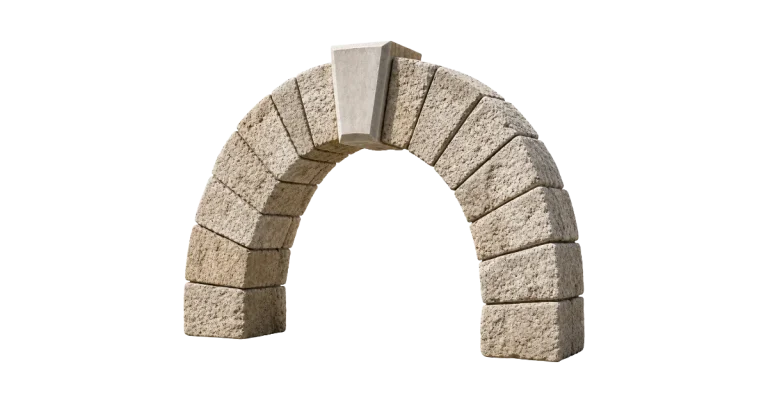
The difference has nothing to do with size, since Boeing is comparable to Airbus. It has nothing to do with resources or technology either. It comes down to something more fundamental and far less visible, which is architecture.
Over two decades, Boeing progressively outsourced its quality control processes, sacrificed its engineering culture under financial pressure and optimised for the short term what needed to remain long term infrastructure. When the disruption arrived, an architecture weakened over years failed to hold. Airbus, which had kept an integrated production culture and invested in its command of the supplier base, went through the same disruption from a position of strength.
| The observation | The definition | The shift |
|---|---|---|
| Same shock, two outcomesTwo organisations in the same sector, exposed to the same disruption in the same year, produce opposite results. The gap is explained by neither size, nor resources, nor technology. An invulnerable company is recognised by its architecture rather than by its reported performance. | An architecture designed upstreamAn organisation whose structure was built deliberately, before the crises, so that external disruption never determines its fate. The promise covers the capacity to never be put out of the game for long, not the absence of difficulty. | Steering the foundationsStop steering performance and start steering the conditions that make performance possible over time. Performance stays a result measured after the fact, while durability becomes an architecture that can be audited before the shock. |
What is an invulnerable company?
An invulnerable company is an organisation whose architecture has been designed, deliberately and over time, so that external disruption never determines its fate. It makes no claim to be sheltered from economic crises, technological disruption, regulatory shocks or shifts in behaviour. It has been built so that nothing can put it out of the game for long.
That definition rests on three words that each deserve unpacking, because each one names a choice most organisations have never actually made explicit.
An architecture designed rather than adapted
The word designed points to a structure thought through in advance, in calm conditions, before the threats materialise. An organisation that adapts reacts to what happens to it. An organisation designed for invulnerability acts on a logic that precedes the disruption. That difference in timing changes the quality of every decision that follows.
Macquarie Group did not wait for the global financial crisis to build its risk architecture. Its Risk Management Group sits as an independent second line of defence, separate from the businesses it reviews, with the standing to challenge and escalate. The group describes that framework as one of the reasons behind an unbroken record of profitability since 1969.
The mechanism was in place long before the market needed it. An organisation that has survived many crises and learned from them has acquired experience. It has not necessarily transformed its foundations.
An architecture rather than a performance
The word architecture covers the whole set of structures, processes, mechanisms and principles that organise how a company works underneath. It includes governance, the culture of decision making, the mechanisms for scanning the horizon, the strength of identity foundations and the quality of strategic redundancy. It stays largely invisible from the outside, which is exactly why it is so rarely steered.
Rio Tinto illustrates the opposite, clinically. In 2020 the group destroyed two rock shelters at Juukan Gorge in the Pilbara that carried 46,000 years of continuous human occupation, and in the same year it declared a full year dividend of 9.0 billion US dollars, including a record final ordinary dividend.
The parliamentary inquiry that followed found that alternative mine plans had been withheld from the Traditional Owners and that internal heritage concerns never reached the people who could act on them. The chief executive and two senior executives left. A balance sheet measures what happened. It does not measure the soundness of whatever produced it.
A durable soundness rather than a temporary one
Invulnerability is not measured by the capacity to get through one crisis. It is measured by the capacity to create value across long cycles, in conditions nobody can forecast at the moment the architecture is designed. That time scale is what separates it from crisis management.
Wesfarmers was registered on 27 June 1914 as a Western Australian farmers cooperative, trading from two rooms in Perth. It has since moved through wool and wheat, fertiliser, coal, hardware, department stores, office supplies, health and lithium. A trajectory of that length belongs to architecture rather than to luck.
That duration is paid for in hard calls rather than in preservation. The group demerged Coles in 2018, exited its British hardware venture in the same period after writing off the investment, and moved capital into battery materials and health soon after. An organisation designed to last moves its capacity when the market moves, which remains painful for the people affected and consistent with its long trajectory.
What invulnerability is not
The definition of the invulnerable company sharpens as much through what it rules out as through what it asserts. Two misunderstandings come up in almost every leadership team I work with, and each one leads to different decisions.
Invulnerability is not infallibility
Invulnerability implies no absence of error, no absence of tension, not even the absence of an occasional step backwards. An invulnerable company can get things wrong, slow down, reverse a decision, restructure an activity or go through a weaker period. Wesfarmers itself bought a British hardware chain, rebadged it, and walked away from the venture with a write off that ran into the hundreds of millions.
Three capacities set an invulnerable organisation apart: correcting its trajectory, changing its structure and preventing a local weakness from becoming an existential crisis. Invulnerability describes an architecture solid enough to absorb variance, contain failures and keep operating without losing its bearings.
That nuance has a practical consequence. A leader who expects invulnerability to deliver absolute protection will judge the whole exercise disappointing at the first incident. The one who expects it to reduce how existential incidents become will measure correctly what it produces.
How an invulnerable company differs from resilient, robust, antifragile and invincible
Four neighbouring notions circulate in strategy conversations. They describe useful realities and they share one underlying logic, since all four define themselves in relation to a disruption. Invulnerability sits upstream of that logic.
Resilience bounces back after the shock. Robustness resists during the shock. Antifragility, a concept developed by the essayist and former trader Nassim Nicholas Taleb, learns from the shock. Strategic invincibility anticipates the next shock.
In all four cases, the disruption remains the central reference point of the organisation.
An invulnerable company defines itself against something else entirely. It has been designed so that disruption is never the central reference point of its existence. It necessarily contains dimensions of robustness, antifragility and invincibility, without being their sum. It is a logic that precedes them and organises them, as set out in the comparison of the five approaches.
Field note
Orsted, the architecture that takes a hit without breaking apart
In 2008 the Danish company DONG Energy produced 85 per cent of its heat and power from fossil fuels, and described itself as one of the best coal plant operators in the world. In 2009 its leadership set a forty year target, which was to invert that ratio and reach 85 per cent renewables by 2040. Nothing in its market required it.
The next decision was architectural rather than strategic. The group ordered 500 turbines of 3.6 MW, more than the entire offshore wind fleet then installed worldwide, to secure its supply chain before it needed it. The 2040 target was met in 2019, twenty one years early.
Then the shock arrived. In 2023 the company took 28.4 billion Danish kroner of impairments on its American portfolio, walked away from its two largest projects in development, suspended its dividend and changed chief executive.
The architecture did not prevent the shock, it prevented the shock from being existential. An organisation whose foundations were laid fifteen years earlier can lose several billion, abandon its two biggest projects and replace its chief executive without its direction or its economic model being called into question.
How an invulnerable architecture shows itself
An architecture cannot be read in an org chart or in a strategic plan. It shows up in two observable signatures that I check before any diagnostic, and that appear in no financial indicator.
It produces decisions that pressure would make impossible
First signature, the organisation executes during the crisis decisions that were made and budgeted before it. Those decisions look counterintuitive to outside observers, since they commit capital at the moment caution would hold it back. They come from a trade off already settled structurally rather than from individual courage.
When elective surgery stopped across the world in March 2020, Cochlear lost most of its implant volume overnight. Within days it launched an equity raising that closed at 880 million dollars, and it kept its research and development spending running at around a tenth of sales revenue rather than cutting it.
That call was not built in reaction. It follows from a board level commitment to a fixed proportion of revenue reinvested in research, held across cycles, which structurally neutralises the temptation to fund a bad half year out of next decade’s product pipeline.
It survives its leaders
Second signature, the principles of decision stay the same after a change of leadership. An architecture written into the mechanisms produces the same trade offs whoever holds the role. An architecture carried by a personality disappears with that person, which makes it a personal policy rather than an institution.
The test is simple to run. If your organisation changed chief executive tomorrow, would its five structuring decisions of the past three years be maintained by the successor, and could you hand over the reasoning that produced them rather than the decisions themselves?
AMP is the counter example. Founded in 1849, it has run through four chief executives and an interim in little more than a decade, sold or demerged its life business, its capital arm, its advice network and its self managed super technology, and never settled the question of which irreplaceable business sits at its centre. Each leader rebuilt the analysis from scratch, with no institutional memory of the founding choices.
These two signatures rest on eight precise mechanisms: long term governance, organisational identity, curiosity for weak signals, business model reinvention, structural responsiveness, a culture of internal dissent, strategic redundancy and the capacity to unlearn.
Go inside the eight mechanisms
Want to know which of these eight pillars is the weakest in your organisation? Discover what each one installs, how it is built and what its absence produces in the overview of the eight pillars of the invulnerable company, and leave with your priority pillar identified.
What invulnerability changes in the way you lead
Adopting this frame changes the nature of the questions leaders ask themselves. Three shifts occur, and each one makes uncomfortable a set of subjects that dashboards never touch.
From improving results to strengthening foundations
The central question of traditional management is about results: growth, margin, market share and customer satisfaction. Those metrics are useful. They do not measure the soundness of the conditions that make them possible over time.
A leader who thinks in architecture interrogates the foundations first, through four questions that no financial report answers.
- Do the governance mechanisms protect long decisions?
- Is the identity clear enough to guide hard trade offs?
- Do the weak signal detection processes actually work?
- Does the culture allow internal dissent, or only tolerate it?
These questions have no obvious numerical answer and they force you to look at what dashboards do not show. That is what makes them rare, and it is also what makes them decisive.
From fast reaction to structural preparation
Responsiveness is a widely celebrated managerial virtue. Improvised responsiveness still differs profoundly from structural responsiveness, even when both produce the same apparent speed.
An organisation that moves fast because it prepared for this acts from a position of strength, with scenarios, pre allocated resources and tested processes. An organisation that moves fast because it has no choice acts from a position of fragility, making the errors that pressure renders inevitable.
From surviving crises to being independent of them
This is the deepest reversal. Organisations that define themselves by their capacity to get through crises place crisis at the centre of their managerial identity and live in permanent expectation of the next shock.
An invulnerable organisation defines itself by the soundness of its foundations. Crises then become manageable disruptions rather than existential threats, and leadership energy moves from managing shocks to building conditions.
Why this definition matters now
The concept of the invulnerable company answers structural breaks that are converging and that leave traditional management frames insufficient at depth. Four of them are directly observable in Australian leadership teams.
The end of the stable environment
For three decades, companies operated in a broadly predictable environment. Globalisation advanced in a straight line, interest rates stayed low and supply chains optimised themselves continuously. Five year business models made sense.
Management tools were built for that environment. Three year strategy, process optimisation, lean management and steering by results all hold together in a world where the fundamental parameters move slowly and legibly.
Organisations that keep steering as though that environment still existed are not strategically behind. They are structurally ill equipped for the ordinary conditions of the coming decade, well before any next crisis arrives.
Shocks that overlap rather than follow one another
The logic of resilience rests on an implicit assumption, which is a quiet stretch between two disruptions in which to rebuild. That assumption stops holding when shocks overlap. An organisation does not bounce back from one shock if the next arrives before it is upright.
Catastrophic bushfire, a pandemic, closed borders, a construction insolvency wave, an energy price spike, the sharpest inflation cycle in a generation, supply chains reconfiguring around geopolitics and disruption by artificial intelligence. For most Australian boards these did not succeed one another, they stacked.
The pace of technological disruption also changes the nature of the problem. Cycles that used to take a decade now take two or three years. A durable competitive advantage can become a commoditised feature inside the span of one strategic plan.
The demonstrated limits of steering by performance
Several Australian collapses share a common structure. Apparently solid results masked a deeply defective architecture, and the dashboards measured visible performance while ignoring invisible fragility.
ABC Learning grew into the largest listed childcare operator in the world, applauded for its expansion, until its accounts proved to rest on related party transactions and licence valuations that did not survive contact with a credit squeeze. Aged care told a slower version of the same story, until the Royal Commission into Aged Care Quality and Safety returned 148 recommendations and titled its interim report Neglect.
The problem does not lie in poor crisis management. It lies in management tools that were not asking the right questions. They measured what is easy to measure and ignored the quality of governance, cultural robustness and the soundness of risk detection mechanisms.
The shift in investor and regulator expectations
For decades, external pressure fell mainly on results. Governance, culture and internal risk mechanisms stayed secondary or purely regulatory subjects.
That shift is under way. Australian entities above the reporting thresholds now lodge a sustainability report under the Corporations Act, and ASIC expects directors to own the systems and controls behind those disclosures. In prudential terms, APRA requires regulated entities to name their critical operations, set tolerance levels for disruption and manage material service providers. Both regimes examine mechanisms rather than outcomes.
Organisations that have not built their architecture find themselves exposed on three fronts at once: rising regulatory exposure, a higher risk premium and weakened standing with customers and partners. Invulnerability is becoming a condition of access to resources.
How to choose your entry point
An architecture is built pillar by pillar, in an order that depends on your real situation rather than on a generic method. Four criteria let you place your organisation before committing to anything.
Four criteria to place your organisation
These four criteria can be answered inside one hour of leadership team time and they determine the relevant entry point. They cover what your organisation actually does, rather than what it says it intends to do.
- The nature of your last significant structural decision. Anticipated from a position of strength, or triggered by an emergency?
- The share of your investment budget allocated to work whose return sits beyond three years. None, marginal, or explicitly protected?
- How long your last significant piece of bad news took to reach you, and the reason it did not arrive sooner.
- Your ability to name a profitable opportunity turned down in the past twelve months for reasons of identity consistency.
If the first and third criteria make you uncomfortable, your entry point is curiosity for weak signals. If it is the second and fourth, start with long term governance and identity, which condition every other pillar.
Diagnostic, workshop or program, what each format produces
Three intervention formats exist on this subject, and they do not produce the same thing. Confusing them explains most of the disappointment reported after an architecture exercise. The table sets out both sides of the equation, since commercial proposals usually mention only the first.
| Format | What it actually produces | What it does not produce |
|---|---|---|
| Keynote, two hours | A shared vocabulary and a collective diagnosis at the same moment | No architectural decision without an organised follow up |
| Diagnostic, two to three sessions | A map of the eight pillars and the identification of the weakest foundation pillar | No mechanism installed, the diagnostic measures without building |
| Program, three to six months | Mechanisms installed, a protected soundness budget and architectural indicators at board level | No visible movement in the financial indicators over the period |
One criterion settles it reliably. If your leadership team does not yet agree on the definition of the invulnerable company, the keynote comes before everything else. If it already agrees and diverges on the priority pillar, the diagnostic is the right entry point.
How I can help you build this architecture
I work on this subject with leadership teams and boards, always starting from real cases and from what already holds in your organisation rather than from a model to roll out.
A keynote to install the vocabulary
The keynote turns the invulnerable company into a concrete and actionable subject for your leadership population. It starts from documented cases that show what this architecture allows and what its absence costs, and it usually produces the conversations organisations would have benefited from having much earlier.
It suits situations where the leadership population is large and the work has to start with a common language. You can see what it covers on the page for the keynote on the invulnerable company.
A workshop to map your fragilities
The workshop maps your portfolio of activities, assesses your capacity for reinvention and identifies the pillars on which your organisation is most exposed. It works on your own cases rather than on outside examples.
You can prepare that session by taking the invulnerability diagnostic for your company on your own, where the divergence between leadership team answers is often the first lesson.
A program to install the mechanisms
The program supports the actual construction over three to six months, starting with the weakest foundation pillar. It installs the soundness budget, the architectural indicators that sit alongside your financial ones and the documented memory of long decisions.
In person or remote, these engagements are designed so that you leave with decisions to make rather than ideas to explore. Book an engagement to talk it through.
Conclusion
There is an apparent paradox in this logic. By not chasing performance, an organisation ends up producing more of it, and for longer, than those that pursue it directly.
Brambles began in 1875 as a Newcastle butcher’s delivery business and now runs one of the largest pallet pooling networks on the planet. It manages that because its architecture, built on a clear identity around shared reusable assets, a stable governance model and sustained investment in its own network, has let it cross each rupture from a position of soundness.
Performance is a result. Durability is an architecture.
That is the founding principle of the invulnerable company, and it is what separates it from every organisation trying to respond better to chaos instead of being designed so that chaos is never its only horizon.
An invulnerable company does not escape reality. Its architecture lets it face reality without disintegrating, transform itself without betraying itself and last without depending on favourable circumstances.
Frequently asked questions about the invulnerable company
What is the difference between an invulnerable company and a resilient one?
A resilient company bounces back after a shock, so it defines itself by the quality of its response. An invulnerable company defines itself by the quality of its design, because its architecture was built before the disruption so that disruption never determines its fate.
Can a small business become an invulnerable company?
Yes, and often faster than a large group. The eight pillars deal with decision mechanisms rather than financial means. A smaller business has a shorter governance chain, which makes protecting the long term and installing internal dissent easier to decide and quicker to apply.
How long does it take to build an invulnerable architecture?
The foundations, meaning identity and long term governance, take twelve to eighteen months before producing visible effects. Structure and mechanisms then install over three to five years. An invulnerable architecture is cultivated continuously rather than finished on a set date.
How do I know my business is fragile when its results are good?
Structural fragility does not appear in financial dashboards, which measure lagging indicators. Interrogate instead how long your last piece of bad news took to reach you, the share of budget protected beyond three years and your ability to name a refusal driven by identity.
Does invulnerability mean no crisis can happen?
No. An invulnerable company can get things wrong, slow down and reverse its decisions. What changes is that a local weakness does not turn into an existential crisis, because the architecture absorbs variance and contains failures without loss of direction.