I have sat in a lot of rooms where a senior leader, halfway through a workshop, quietly admits that they are not sure they deserve their own job. It happens more often than any org chart would suggest, and it is one of the surface signs of something larger. The workplace trust crisis is the erosion of trust in institutions, in leaders, in the future and in ourselves, and it has walked straight into the office.
This is the second article in my series on the seven management crises, and it follows the first link, management and the climate emergency. Where climate anxiety asks whether the work does harm, the trust crisis asks something more basic: can I rely on any of this, and can I rely on myself. I want to make an argument that sounds strange at first and turns out to be the most useful thing a manager can hear right now. Trust has become a scarce public resource, and your team holds part of it on loan.

| The old reading | What the data shows | The shift that transforms |
|---|---|---|
| A soft-skills problemThe workplace trust crisis is often treated as a matter of communication style, something a friendlier tone or a values poster can fix. Read that way, it stays cosmetic and the erosion continues underneath. | A scarce resourceTrust in institutions, media and government keeps falling, while the employer has become one of the last places different people still cooperate. Distrust now shapes how teams collaborate, take initiative and stay. | The manager as trust brokerTrust is a ledger of kept promises the team quietly audits. In a society turning inward, the manager holds a share of its last remaining trust, and stewards it one ordinary promise at a time. |
What the workplace trust crisis really is
The workplace trust crisis is the erosion of confidence across four fronts at once: in institutions, in other people, in the future and in oneself. It is multidimensional, it feeds on economic instability, and it reaches the manager because every one of those fronts changes how a team cooperates and how much of itself it commits to the work.
Defining the workplace trust crisis
Trust is the willingness to be vulnerable to someone else’s actions based on the expectation that they will do the right thing. When that willingness drains away across a society, cooperation gets more expensive, because every exchange now needs a guarantee it used to carry for free.
The scale is documented. The 2026 Edelman Trust Barometer, a survey of nearly 34,000 people across 28 countries including Australia, found that seven in ten people are now unwilling or hesitant to trust someone whose values, information sources or background differ from their own. Edelman calls this turn insularity, a retreat into smaller and more familiar circles, and it is the backdrop against which every manager now leads.
When trust falls, the hidden cost is control. A low-trust team needs more sign-offs, more documentation and more supervision to do the same work, because the assurance that used to come for free now has to be manufactured. That overhead never appears as a line in the budget, and it is one of the largest silent taxes a manager pays. Rebuilding trust is, among other things, a way to get that wasted energy back.
The many faces of eroding trust
The crisis wears several faces, and a manager who only sees one will keep treating the wrong thing. Distrust in institutions, distrust between people, doubt about the future and doubt about oneself each land differently in a team, and they reinforce one another.
- Institutional distrust: falling confidence in government, media and large organisations, which colours how people hear any official message.
- Interpersonal distrust: a growing wariness of anyone seen as different, which makes cooperation and honest disagreement harder.
- Loss of confidence in the future: pessimism about the economy and the wider world, which shrinks people’s willingness to invest, commit or plan.
- Loss of confidence in oneself: lower self-efficacy, the belief that you can handle a specific task, and lower anticipated self-efficacy, the belief that you can handle the challenges still to come.
That last pair matters most for daily management. Self-efficacy is confidence in your ability to do the task in front of you, and anticipated self-efficacy is confidence that you will meet the challenges you cannot yet see. When both fall, people stop taking initiative, and a manager reads it, wrongly, as a lack of drive.
I labour this point because the four faces call for different responses. You cannot fix a person’s doubt about the economy with a pep talk about their own ability, and you cannot repair low self-efficacy by explaining the news. A manager who works out which trust is actually missing, in themselves and in the team, is already halfway to repairing it.

How the trust crisis shows up for managers and their teams
Inside a team, the trust crisis rarely arrives as a conversation about trust. It shows up as caution under economic pressure, as a quiet fear of sliding backwards, and as a spike in the private conviction that one does not really belong in the role. Reading those three signals is the first step to managing them.
None of the three announces itself honestly. The insecure person talks about workload, the one afraid of falling behind talks about fairness, and the one battling impostor feelings talks about almost anything else. A manager’s first job here is translation, hearing the trust worry underneath the presenting complaint.
The economic backdrop feeding the fear
Distrust grows fastest when the ground feels unstable, and the Australian ground has been shifting. Company failures have climbed sharply, which every team feels as a low hum of insecurity even when their own job is safe.
The numbers are concrete. ASIC reports that more than 11,000 companies entered external administration in 2023 to 2024, a 39 per cent jump on the year before and the busiest period for insolvencies since 2012 to 2013, and the following year rose again to around 14,700. Edelman adds the emotional reading, finding that two-thirds of employees worry that trade and economic conditions will hurt their employer. People do not need a personal redundancy to lose confidence, the surrounding noise is enough.
Insecurity changes behaviour in ways that look like disengagement. People stop volunteering for the risky project, they guard their patch, and they keep their heads down while they wait to see which way the wind blows. A manager who mistakes this caution for laziness reaches for pressure, which is exactly the wrong tool for a fear problem.
The fear of downward mobility
Underneath job insecurity sits a deeper worry, the fear of ending up worse off than the generation before. It shows up as a reluctance to take risks, a defensive grip on the current role, and a sense that effort no longer reliably leads anywhere.
Australia holds a genuinely interesting counter-signal here. The Scanlon Foundation’s 2025 Mapping Social Cohesion study found that local connections through neighbourhoods, workplaces and community groups are the glue holding the country together, with cohesion broadly stable even through a hard few years. Trust in the federal government to do the right thing sits at only 37 per cent, yet people’s faith in the circles closest to them holds. For a manager, that is not trivia, it locates where trust can still be rebuilt: up close.
There is a subtler pattern worth naming. Younger workers in particular tend to stay confident about their own path while growing pessimistic about the collective one, and the managerial consequence is direct. They pour their energy into what they still feel they control, which is themselves, and they pull it back from the shared project they feel they cannot influence. Give them a real say in something that matters, and that withdrawn energy tends to come back.
The rise of impostor feelings at work
The self-doubt front has a familiar name: impostor feelings, the persistent sense of not deserving your success and the fear of being exposed as a fraud. It is common, it is not a disorder, and it turns up as often in the corner office as at the start of a career.
A widely cited review estimates that around 70 per cent of people experience impostor feelings at least once, and one of that paper’s authors sits at the University of Tasmania. A 2024 evidence review in the Journal of Organizational Behavior went further and mapped how impostor feelings at work drag down job performance, job satisfaction and wellbeing, and how they feed burnout. A promotion, which should settle the doubt, often re-triggers it, which is worth remembering the next time you elevate a quiet high performer.
On the ground, impostor feelings hide in plain sight. They look like relentless perfectionism, a reflex to deflect praise, and a habit of chalking wins up to luck or timing rather than skill. A manager who recognises the pattern can do something simple and powerful: name the specific competence they are seeing, so the person has real evidence to argue with their own doubt.
The 2026 paradox, the employer is the last institution standing
Here is the most counter-intuitive finding in the recent data, and it lands squarely on managers. While trust in politics, media and institutions keeps falling, one institution has held and even risen: the employer. In a society turning inward, the workplace has become one of the last places where people who differ still cooperate every day.
Why your team trusts you more than almost anyone
The employer now outranks nearly every other institution on trust. Edelman finds that my employer draws 78 per cent trust from its own people, running 14 points ahead of business in general and 25 points ahead of government. Scanlon’s Australian picture rhymes with it: the connections closest to people, including the workplace, are exactly the ones still holding.
This is a gift and a warning in the same statistic. Your team extends you trust it no longer extends to almost any public institution, which gives you real leverage to lead. It also means the stock is precious and easily spent, because there are fewer reserves left to fall back on if you burn it.
Proximity is what earns it. People trust what they can watch closely and test repeatedly, and a team watches its manager follow through, or fail to, dozens of times a week. That steady stream of small evidence is why a direct manager can hold trust a remote institution cannot, and it is also why the trust drains away quickly once the follow-through stops.
The manager as trust broker of last resort
Because the employer is trusted, people now expect it to do something with that trust: to bridge the divides that politics and media no longer can. Edelman frames the employer as the trust broker between groups that no longer trust each other, and the manager is where that expectation actually lands.
The appetite for it is real and so is the fragility. Edelman finds that 42 per cent of people would rather change departments than report to a manager whose values differ from theirs, and 34 per cent say they would put less effort into helping a team leader with different political beliefs. A manager who can hold a mixed team together, without pretending everyone agrees, is doing something the wider society has largely stopped managing to do.
Brokering trust does not mean forcing agreement. It means setting the terms on which a mixed team disagrees productively: shared rules of conduct, a genuine hearing for the minority view, and a decision process people can see is fair even when it does not go their way. That work is unglamorous, and it is exactly what the moment now asks of managers.
This reframes the whole crisis. The question stops being how do I win back my team’s trust, and becomes how do I steward the last institutional trust still standing. Every kept promise adds to a reserve society is running short of, and every broken one draws down more than your own credibility.
I want to be honest about the weight of this. Being handed society’s residual trust is flattering until you notice it means the stakes of ordinary management have quietly risen. The missed deadline you never explained, the decision that contradicted last month’s promise, the feedback you dodged, each of these now spends something scarce. The upside is just as real, because a manager who takes the role seriously is doing repair work the wider world badly needs.
What your team now expects you to do with that trust
Being trusted is only half the deal, your team also has views on how you use it. The recent data shows people want leaders who bridge difference rather than dodge it, who consult across values and who engage with criticism instead of silencing it. The passive strategy of saying nothing has stopped working.
Edelman finds that people endorse leaders who consult those with different values and backgrounds when making decisions (75 per cent) and who engage constructively with employees who criticise the company (74 per cent), and they expect the chief executive to lead that work (73 per cent). The signal for a manager is clear. Keeping your head down now reads as a failure to use the trust you were given, because people want the hard conversation held well, not avoided.
Field note
The leader who admitted the doubt
In my workshops on leading through uncertainty, one moment recurs so often that I now wait for it. Somewhere after the first break, a senior and visibly accomplished leader says, half to the room and half to themselves, that they are not sure they are up to the job and are quietly waiting to be found out.
What happens next is the interesting part. The temperature in the room changes. Other managers, who had been performing certainty at each other for an hour, start speaking plainly about their own doubts, and the conversation finally becomes useful. The admission does not weaken the leader in their team’s eyes, it does the opposite, because people trust someone who is honest about the hard parts far more than someone who pretends there are none.
The lesson I take into every engagement is that trust is not restored by a leader looking invincible. It is restored by a leader who names the doubt, then keeps the ordinary promises that prove the doubt did not stop them showing up.
How to rebuild trust as a regenerative manager
Rebuilding trust is less about grand declarations and more about a pattern of kept promises the team can actually see. As a regenerative manager, your job is to treat trust as something you deposit through consistent acts, to grow people from compliance into ownership, and to distribute rather than hoard the authority that trust unlocks.
Trust as a ledger of kept promises
The most practical way to think about workplace trust is as a ledger. Every commitment you keep is a deposit, every one you drop is a withdrawal, and your team keeps the running balance whether or not you do. The method below turns that idea into a weekly habit rather than a slogan.
- Make fewer promises, and make them explicit, so the team knows exactly what you have committed to.
- Keep the small ones visibly, because the tiny promise kept builds more trust than the grand one announced.
- When you cannot deliver, say so early and explain why, rather than letting the silence do the damage.
- Admit what you do not know, since manufactured certainty is the fastest way to spend trust you will want later.
- Trust the level below you at least as much as the level above trusts you, and watch how quickly it is returned.
None of these steps is expensive. They ask for consistency and a little courage, which is exactly why they are rarer than any policy document about values.
A quick contrast makes it concrete. One manager promises the team a decision by Friday to look responsive, then goes quiet when Friday comes and nothing is ready, and the silence reads as evasion. Another promises only to update the team by Friday on where the decision stands, then does exactly that, even when the answer is still open. The second manager promised less and delivered fully, and over a quarter that is the pattern a team learns to call trustworthy.
From functional employee to vital contributor
Trust changes what kind of contribution people are willing to make. I draw a distinction from years of practice between two modes: the functional employee, who executes the process without questioning it, and the vital contributor, who improves the process and shares what they know. Fear pushes people towards the first mode, and trust invites them towards the second.
| Marker | The functional employee | The vital contributor |
|---|---|---|
| Relationship to process | Follows it without questioning | Improves it and questions it openly |
| View of colleagues | Treats them as competitors | Treats them as partners in a shared goal |
| Attitude to knowledge | Hoards it to stay indispensable | Shares it and teaches others |
| Attitude to error | Hides mistakes for fear of blame | Uses mistakes as material for learning |
| Attitude to leave | Fears taking it, in case the role disappears | Takes it, trusting the team to carry on |
You cannot order someone into the second column. You earn it by keeping promises, celebrating honest mistakes, and making it safe to disagree, which together tell people it is worth investing the extra part of themselves.
One caution about this distinction. It describes modes that fear and trust pull people into, and it is not a licence to label individuals and write them off. Most so-called functional behaviour is a rational response to a low-trust environment, and the same person becomes a vital contributor once the environment changes. The label belongs on the conditions you created before it belongs on the person.
Regenerative leadership and distributed trust
Regenerative leadership, my own frame, is a way of leading that sets out to leave people, teams and their wider environment healthier than it found them. Applied to trust, it means moving from vertical control to distributed responsibility, so that authority follows capability rather than hierarchy. I describe that wider environment, and the way the physical setting, the culture and the economic pressure outside the office all act on the same person, in your workplace is an ecosystem, not a machine.
Distributed trust is the operational core of it. Giving people real autonomy, which is confidence made visible, is one of the strongest signals a manager can send, and it maps onto clear levels rather than a vague open door. All of this sits inside what I call the age of fragility, my frame for a world where individuals, careers and organisations are more exposed than the old VUCA and BANI vocabulary admitted, and where regenerative management becomes the practical answer to the workplace trust crisis.
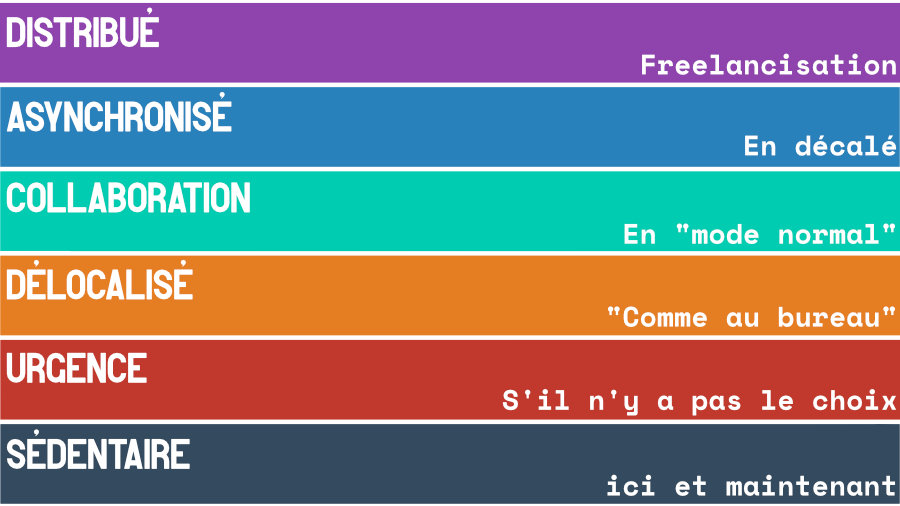
Distributed trust is a set of concrete choices about how much room you give people. Autonomy runs along a spectrum, from doing exactly what they are told, through choosing how to do it, to deciding what to do and when. Moving a capable person one notch along that spectrum is one of the clearest trust signals a manager can send, and it costs nothing but nerve. The image below sets out those levels, so the choice becomes deliberate rather than accidental.
Turn a trusted workplace into your advantage
Want to make your managers the trust brokers your organisation now needs? Discover how I rebuild distributed trust in my keynote on regenerative management, designed for leaders who want kept promises, not slogans.
How to choose your approach to rebuilding workplace trust
Once a leadership team accepts that trust is the constraint, the question becomes what to invest in, and the answer depends on your maturity. Some organisations need to fix a culture that punishes honesty, others need to lift manager capability, and a few are ready to change how leadership itself works. The comparison below is decision support, not a pitch.
Culture program, manager capability or leadership shift, for which maturity
Each option solves a different problem, and buying the wrong one wastes both money and goodwill. A culture fix removes the fear that blocks trust, a capability program changes how managers behave day to day, and a leadership shift changes the system that shapes their behaviour. Match the tool to where you honestly are.
The sequencing matters as much as the choice. A capability program layered on top of a culture that still punishes honesty will collapse, because managers will not risk the very behaviours you are training them in. Fix the floor first, then build on it.
| Approach | Best when | What it changes | Watch-out |
|---|---|---|---|
| Culture and safety reset | People stay silent and hide mistakes | Whether it is safe to speak and to err | Stalls if leaders keep punishing the honesty they asked for |
| Manager capability program | Intent is good but daily habits are inconsistent | How managers make and keep promises | Needs leadership modelling, or it reads as more training |
| Mentoring and peer support | Impostor feelings and isolation run high | How normal it feels to admit doubt | Becomes a talking shop without real follow-through |
| Regenerative leadership shift | Control, not skill, is the real constraint | How authority and trust are distributed | Slower, and it exposes any gap between stated values and acts |
The signals that should guide your investment
A few signals tell you where to spend. Read them without flattering yourself, because each points to a different level of response.
- If people go quiet in meetings and mistakes surface late, start with culture and psychological safety.
- If your best people hedge, hoard knowledge or refuse to take leave, invest in manager capability and distributed trust.
- If talented people keep leaving managers rather than the company, treat it as a leadership problem, not a perks problem.
How I can help you master the workplace trust crisis
I work with leadership teams that want to turn a trusted workplace into a genuine advantage. My role is to equip managers to keep the promises that build trust and to lead mixed teams through uncertainty, rather than to add another initiative nobody has time to run.
Keynotes and workshops on the age of fragility and regenerative leadership
My keynote on regenerative management reframes the trust crisis as a leadership opportunity and gives managers a language for it that avoids both denial and despair. In workshops and masterclasses, we practise the ledger of kept promises and the honest naming of doubt, using your real situations until they become habits.
Manager programs and diagnostics
Because a single session rarely sticks, I build manager development journeys that run over months, so distributed trust has time to settle into practice. When the trust crisis is tangled with the other pressures on your teams, we place it back inside the full picture and work through a systemic response to the seven management crises, so you treat the chain rather than a single link.

Conclusion, the workplace trust crisis is a management responsibility
The easy move with a crisis this big is to treat it as weather, something that happens to us and that we wait out. The data says otherwise. Trust in the wider world keeps falling, and yet the workplace has become one of the last places it holds, which hands managers both a rare advantage and a real duty of care.
It also reframes what good management is for. In a fragmented society, a well-run team is one of the few remaining places where people practise cooperating across difference, which makes the manager’s craft quietly civic as well as commercial. That is a heavy way to describe a Tuesday stand-up, and it happens to be accurate.
The better move is to treat trust as your work. Keep the ordinary promises, name the doubt honestly, distribute authority to the people closest to the work, and grow functional employees into vital contributors. Do that, and the second link in the chain stops pulling the others down. Handled as a management responsibility rather than a mood in the air, the workplace trust crisis becomes the moment your team decides you are worth their trust.
Frequently asked questions about the workplace trust crisis
What is the workplace trust crisis?
The workplace trust crisis is the erosion of trust in institutions, in other people, in the future and in oneself, carried into the office. It makes cooperation more expensive and initiative rarer, which is why it reaches the manager well before it reaches any policy.
Why do employees trust their employer more than the government?
The 2026 Edelman data shows the employer is now the most trusted institution, ahead of business in general and government. In a society turning inward, the workplace is one of the last places different people still cooperate daily, so proximity and repeated dealings keep that trust alive where distant institutions have lost it.
How can a manager rebuild trust with their team?
Treat trust as a ledger of kept promises. Make fewer commitments and keep the small ones visibly, flag early when you cannot deliver, admit what you do not know, and distribute real authority. Consistency over time rebuilds trust far more reliably than any single gesture or values statement.
Is impostor syndrome part of the trust crisis?
Yes. Impostor feelings are the self-doubt face of the trust crisis, and around 70 per cent of people experience them at some point. They dampen initiative and can worsen after a promotion, so managers who normalise honest doubt and validate real achievements help their teams carry it.