Ask why leaders stop collaborating under pressure and you will hear sensible answers: no time, no budget, too much at stake to experiment. I have watched it up close, in client after client and in my own businesses, and the real reason is more uncomfortable. When the ground moves, the instinct is to pull the team in tight, tighten the grip, and decide everything yourself. That grip feels like leadership. It is usually the thing that sinks you.
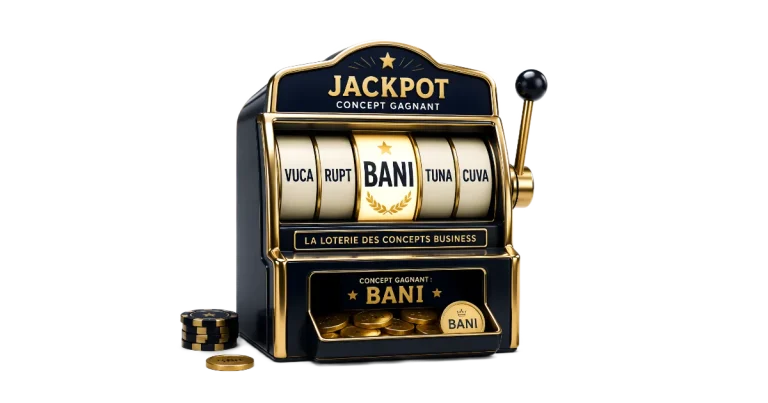
This piece is about that reflex, why it fires, and how to override it. The override has a name I have used for years, enableship, and it runs against every survival instinct you have. This is the leadership problem underneath the fragility frameworks, whether you call the conditions VUCA or BANI. The models name the instability. The scarcity reflex is how leaders personally respond to it.
| The reflex | What it costs | The override |
|---|---|---|
| The scarcity reflexUnderstanding why leaders stop collaborating under pressure means naming the reflex behind it: when resources shrink, leaders tend to grab control, protect their own patch, and treat collaboration as a luxury. | A slow retreatThe grip that feels protective narrows decision-making, shuts down experimentation, and leaves the team waiting for instructions. Survival mode preserves today and forfeits tomorrow. | EnableshipThe counter-move is to hand the team the licence to collaborate and experiment. In fragility, a leader who enables outperforms one who controls, because the growth sits in the ideas control never reaches. |
The scarcity reflex behind the retreat
Leaders stop collaborating under pressure because scarcity rewires how they think. When money, time or certainty runs short, attention narrows to the immediate threat and the mind starts to treat sharing resources as risk. The reflex to hoard and control feels like sound judgement in the moment. It is a predictable response to scarcity, and it is the same one I have to fight in myself.
Naming the reflex is the first step to overriding it. Once you can see it firing, you can choose the other move.
Why leaders stop collaborating under pressure
Under pressure, collaboration looks like exposure. Sharing people, budget or information with another team feels like giving away scarce resources you may need to survive. So leaders close ranks, protect their patch, and default to command. The behaviour is rational inside a scarcity frame and destructive outside it.
There is hard science under this. Research on scarcity found that it imposes a cognitive load that saps attention and narrows focus, whether the shortage is money or time. A leader running on three months of cash has less mental bandwidth for the wide, generous thinking that collaboration needs, and a stronger pull towards the nearest fire. The retreat is partly a brain running low on room to think.
There is an emotional layer on top of the cognitive one. Uncertainty makes people feel exposed, and an exposed leader wants a smaller, more controllable world. Collaboration widens the world at exactly the moment the leader craves a narrower one. Reading that pull as fear rather than strategy is half the battle.
The grip that feels like leadership
The scarcity reflex shows up as control. The leader becomes more directive, takes decisions back in-house, and runs the business day to day rather than looking up. It reads as decisiveness and it is really a retreat, the corporate version of pulling out the sandbags instead of fixing the bayonet.
I have watched capable, open leaders change overnight under this pressure. One client of mine in a large pharmaceutical business was a naturally collaborative operator, so much so that he was the first person I worked with in France on building T-shaped teams. Handed a hard commercial target on top of a restructure, with underperformance in other lines he did not even control, he folded in on his own team and switched to survival mode.
He was not alone in that instinct. I have seen executives at a global coffee brand do the same when a giant competitor moved onto their turf, and managers in a European public service go quiet for weeks when the ground shifted. Uncertainty is a reliable test of who retreats and who moves.
I include myself in this. In the businesses I have run, I was more open to risk when things were growing and more controlling the moment they wobbled, turning directive and taking things day by day. The reflex does not spare the people who teach this for a living, which is exactly why it is worth naming out loud.
Autonomy against control is one of the extreme paradoxes every manager carries, and a downturn is when that pair stops being theoretical.
Why hoarding control is the real risk
Hoarding control in a downturn feels safe and is the real risk. The growth that pulls an organisation out of trouble lives in ideas, partnerships and experiments that a single anxious decision-maker never reaches. When the leader becomes the bottleneck, the team stops bringing options and starts waiting for orders. The retreat protects the leader’s comfort and starves the business.
This is the turn most advice misses. The problem is rarely the leader’s mindset. It is the leader’s grip.
The bottleneck you become
A leader who takes back every decision turns the whole team into an audience. People who were bringing ideas last quarter now bring problems and wait to be told. My pharmaceutical client watched his own team go passive, precisely because he had pulled the decisions towards himself to feel in control.
The cruel part is that this happens when you most need the team firing. A downturn is exactly the moment you want twenty people hunting for options, and the scarcity reflex leaves you with one tired person hunting alone.
A team reads a leader’s grip faster than any memo. When decisions start flowing one way, people learn that initiative is unwelcome and adjust accordingly. Within weeks the leader is surrounded by capable people acting as if they were juniors, which then confirms the leader’s belief that everything has to run through them.
Sharing the reading of a complex situation is a core discipline of day-to-day VUCA management, and a leader who centralises every call removes it.
Enableship, the override
Enableship is my term for the leadership of innovation: the leader who enables a team to collaborate, experiment and decide, rather than deciding for them. In fragility it is the override to the scarcity reflex. You stop being the person with the answers and become the person who makes answers possible.
My client got there without a label for it. Under pressure he eventually delegated, stopped managing his team like children, and gave them room to collaborate inside and outside the business. The ideas that steadied the line came from that team, not from him. Without knowing it, he had become an enabler, and the shift lifted both the results and the morale of the people around him.
In practice, enableship is a set of concrete moves rather than a warm attitude. You name the decisions the team can make without you, you fund small experiments before they are proven, and you show up as a contributor in the room instead of the judge at the end. Each move hands back a piece of control the scarcity reflex wanted to keep.
How to unlock collaboration when resources are tight
You unlock collaboration under pressure by changing what the team is allowed to do. Asking people to try harder while you keep every decision does nothing. Two moves do most of the work: reframe scarcity as a bet rather than a shortage, and give the team room to run several small experiments at once. Both hand power outward.
Neither move costs much money, which is the point. They cost the leader some control, which is why they are hard.
Turn scarcity into a bet on the future
Scarcity thinking treats every resource as fixed and dwindling, so the only logical move is to guard it. The reframe is to see a tight period as a bet on a bigger return, where skills can be redeployed, processes rethought and partnerships reopened. That shift from guarding to investing is what reopens the door to collaboration.
I call this working in the world of AND: pursuing several options at once instead of staking everything on one. Optionality makes you more strategic and less fearful, because no single bet has to carry the whole business. When a team knows it can chase three paths, it stops defending one and starts exploring.
Resourcefulness beats hoarding here. In tight periods I have seen teams bring agency work back in-house, licence idle capacity to a partner, and repurpose an existing production line for a new product, all without new spend. The resource was never as fixed as the scarcity reflex insisted. It was waiting on permission to be used differently.
Run three bets across three horizons
The practical version is a session I run with teams under pressure, built on the basics of design thinking. The brief is deliberately small, so a nervous team can say yes to it. It gives people a structured way to collaborate without asking them to bet the business.
- Bring the team together for one day, with rank left at the door.
- Ask for three ideas that are desirable (someone wants it), feasible (you can build it) and viable (it pays).
- Size each idea to a horizon: something shippable by the end of the month, the quarter and the year.
- Split into small groups that are free to collaborate inside and outside the business, then let them run.
Treat the year-horizon idea as a team side hustle, a new stream running alongside the core work. The month and quarter ideas keep the lights on and prove the method. The team leaves with something to build and, more importantly, with the sense that it is trusted to build it.
The size of the brief is doing more work than it looks. A team in survival mode will refuse a call to reinvent the business and happily accept a request for one small idea it can ship this month. You lower the stakes enough that people will risk contributing, then let the early wins rebuild the appetite for bigger bets.
Field note
Three months of cash and a cancelled rally
Years ago I ran a business in motorsport competition. When the Dakar was cancelled, we lost around 80 per cent of our revenue almost overnight, with roughly three months of cash left in the account. Every instinct told me to cut, hold, and protect what was left, which is exactly the scarcity reflex I now watch for in clients.
We did close to the opposite. I put the team in a room, admitted I did not have the answer, and asked what we could build with what we still had: the workshop, the know-how and the relationships. The ideas that kept us alive came from people I would never have thought to ask if I had stayed in sole control of every call.
The move that saved the business was handing over the very control my fear wanted to tighten. That is why I trust enableship over instinct: under pressure, the leader who opens the room beats the leader who guards it.
How to choose your response to a downturn
Choosing how to respond to a downturn comes down to your runway and your position. Your nerves are the worst adviser in the room. If the business is genuinely weeks from insolvency, cut hard and stabilise first. If you have a few months and a defensible position, retrenching on its own forfeits the recovery, and most leaders cut when they could be enabling.
This is a decision to make with a clear head, before the reflex makes it for you. The table sets out the trade-offs so you can weigh them against your own situation.
Cut and hold, or enable and bet
The honest choice is rarely all or nothing. It is about sequence and proportion, matched to how much runway you actually have.
| Response | Best when | What it protects | What it costs |
|---|---|---|---|
| Cut and hold | Weeks of runway, no clear growth option | Short-term solvency | Forfeits the recovery if you stop there |
| Enable and bet | Months of runway, a defensible position | The team’s ability to find growth | Needs the leader to release control |
| Both, in sequence | A real cash crunch with a viable core | Stability now, options next | Fails if the enabling never arrives |
Sequence matters more than the label. A business that genuinely needs to cut can still commit, out loud, to the enabling move that follows, so the team knows the retreat is a phase rather than the whole plan. The failure mode is cutting hard, promising to reinvest, and then never opening the room once the immediate danger passes.
Which signals say enable rather than retrench
Read the situation honestly and the answer usually declares itself. A few signals tell you the scarcity reflex is steering rather than the facts.
You should lean towards enabling when you have months of runway rather than weeks, when your team has gone quiet and stopped bringing ideas, and when your competitors are all retreating and leaving space open. You should be suspicious of your own instinct when the cuts on the table protect your comfort more than the balance sheet. Those are the moments to open the room.
How I can help you lead through fragility
I help leaders and teams override the scarcity reflex and put enableship to work. That runs from a keynote that reframes a downturn as a moment to open up, through workshops that build the collaboration habit, to a diagnostic that shows where control is bottlenecking your team.
The aim is always the same: fewer decisions stuck on one desk, and more of the business able to find its own way through uncertainty.
Keynotes and workshops on enableship
A keynote resets how a room reacts to bad news, turning the instinct to close ranks into a decision to open them. Workshops go further and build the habit, running your team through the world of AND and a real session on three bets across three horizons. Manager communities keep the practice alive after I leave.
Lead the other way in a downturn
Ready to turn the scarcity reflex into a growth response? Explore how enableship helps you lead a team through uncertainty instead of gripping tighter.
A collaboration diagnostic for tight times
The diagnostic looks at where decisions actually get made and how far the licence to act reaches down your team. It surfaces the choke points where the scarcity reflex has centralised control without anyone deciding it should, then maps the smallest changes that would let people collaborate again. It pairs well with a leadership program when the pattern is deep.
Conclusion
If you take one thing from this, let it be the reason why leaders stop collaborating under pressure: the scarcity reflex dresses a control-grab up as good judgement. The businesses that come through a downturn are rarely the ones that gripped hardest. They are the ones whose leaders opened the room when every instinct said to close it. Build the enableship habit before you need it, so that when the ground moves, your first move is to hand the team the licence to find the way out.
Frequently asked questions about leading through uncertainty
Why do leaders become risk-averse in a crisis?
Scarcity narrows the mind. When resources shrink, attention locks onto the immediate threat and sharing anything feels like danger, so leaders protect their own patch. That is a large part of why leaders stop collaborating under pressure, and it is a predictable response rather than a personal failing.
What is enableship?
Enableship is my term for the leadership of innovation: leading by enabling a team to collaborate, experiment and decide, instead of deciding for them. In a downturn it is the deliberate override to the instinct to hoard control, and it is where the growth ideas actually come from.
Is collaboration worth the effort when resources are tight?
Yes, and it matters most precisely when resources are tight. The ideas, partnerships and experiments that pull a business out of trouble live outside the head of one anxious decision-maker. Handing the team room to collaborate is how you reach the options a solo leader never finds.
How do you keep a team innovating during a downturn?
Give them a small, structured brief instead of a vague call to be creative. Run a one-day session to find three ideas that are desirable, feasible and viable, sized to the month, the quarter and the year. Small bets across several horizons keep a nervous team moving.